Trump's Board of Peace Just Raised $17 Billion for Gaza. The Palestinians Weren't Invited.
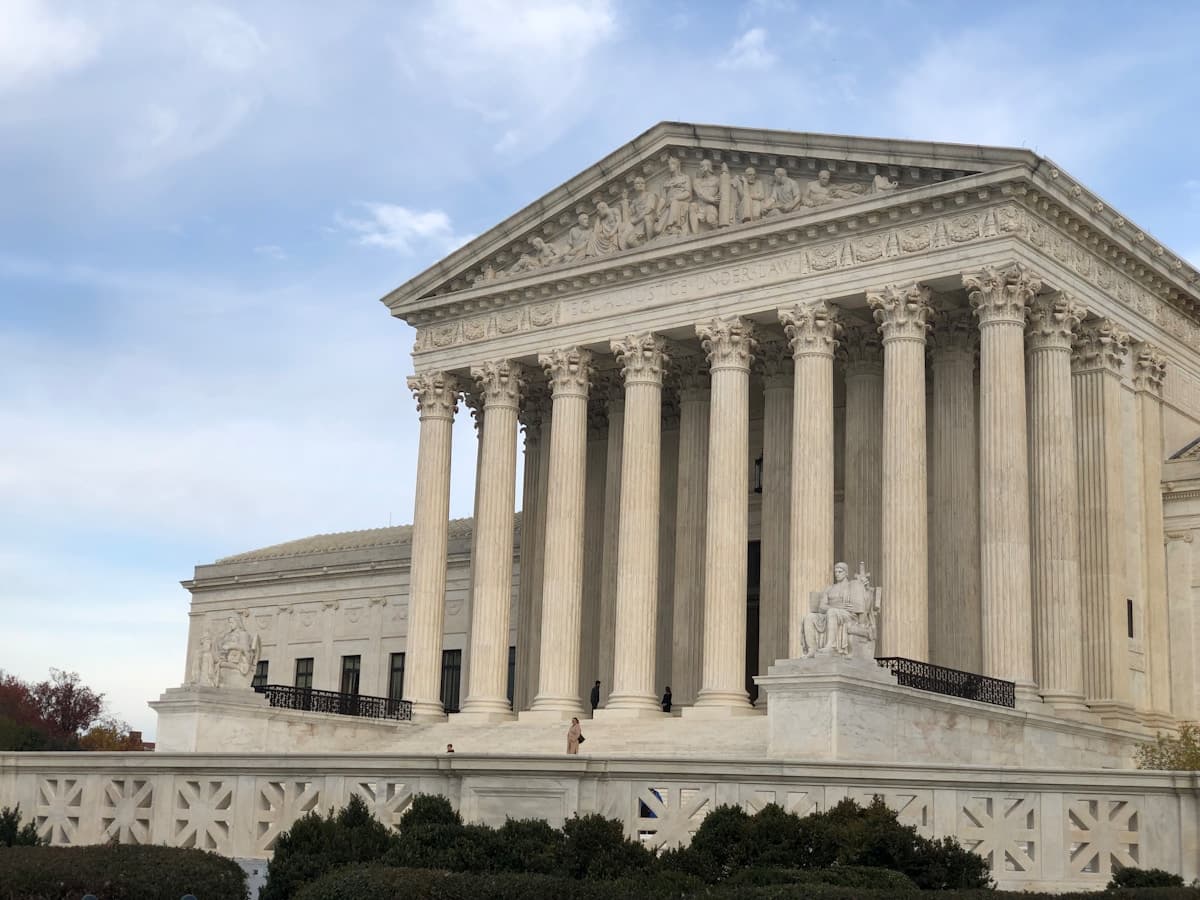
$17 Billion, 47 Countries, Zero Palestinians
President Trump convened the inaugural meeting of his Board of Peace yesterday at the Donald J. Trump Institute of Peace in Washington, D.C. Representatives from 47 countries and the European Union gathered to hear a status report on Trump's Gaza reconstruction plan and to make financial commitments. The headline numbers were large: the United States pledged $10 billion, nine member states committed $7 billion in reconstruction and relief funds, and several countries offered thousands of troops for an international stabilization force.
The contributing countries for the $7 billion package were Kazakhstan, Azerbaijan, UAE, Morocco, Bahrain, Qatar, Saudi Arabia, Uzbekistan, and Kuwait, with the UAE and Kuwait alone contributing $1.2 billion. Indonesia, Morocco, Kazakhstan, Kosovo, and Albania pledged troops for the stabilization force, with Indonesian President Prabowo Subianto committing up to 8,000 soldiers that could be ready by the end of June.
But the most striking detail about the most ambitious international peace initiative of the Trump presidency was who was not in the room: there was no Palestinian representation on the board. Not a single Palestinian official, civil society leader, or observer was present at a meeting that will determine the future of Palestinian territory. Human rights experts and critics have called the Board of Peace a colonial project that decides the fate of a people without giving them a voice.
What the Board of Peace Actually Is
The Board of Peace was initially conceived as a mechanism to end the Israel Hamas war and oversee Gaza's reconstruction. But it has evolved into something much broader. Trump has positioned it as a global conflict resolution body that operates outside the United Nations framework, with a mandate that extends well beyond Gaza.
Joining the board as a permanent member requires a $1 billion membership fee, and more than 20 countries have accepted invitations. The board's charter makes no specific reference to Gaza, which is a significant departure from the UN Security Council resolution that originally envisioned such a body. That resolution called for the board to be limited in time until 2027 and to include Palestinian representation.
Trump himself framed the board's ambitions in expansive terms yesterday, saying it would be "looking over" the United Nations and could address conflicts around the world. He indicated an Iran decision would come "within days," suggesting the board's first meetings are overlapping with broader Middle East diplomacy involving the nuclear talks in Geneva.
The EU's top diplomat Kaja Kallas has publicly criticized the disconnect between the board and the UN resolution that inspired it. At the Munich Security Conference, she noted that the Board of Peace statute "makes no reference" to the provisions the Security Council agreed to, including time limits and Palestinian participation. Several major European allies attended the meeting but with noticeable wariness about endorsing its broader mandate.
The Money vs. the Reality
The $17 billion in combined pledges sounds impressive, and by any measure it's a significant sum. But it needs context. The United Nations, World Bank, and European Union estimate that fully reconstructing Gaza will cost approximately $70 billion. The pledges cover less than a quarter of that figure.
More importantly, pledging money and actually disbursing it are very different things. International reconstruction funds have a long history of being promised at summits and then failing to materialize. The 2014 Cairo Conference for Gaza reconstruction saw over $5 billion in pledges; only a fraction was ever delivered. The same pattern has repeated in Afghanistan, Syria, and Haiti.
Trump's $10 billion U.S. commitment is particularly notable because it would require congressional appropriation, which is far from guaranteed. The Republican majority in the House has been focused on domestic spending cuts, and bipartisan support for large scale foreign aid packages is thin. The mechanism for actually transferring and monitoring these funds remains undefined.
The troop commitments face similar challenges. Indonesia's pledge of up to 8,000 soldiers is the largest individual contribution, but deployment is contingent on Hamas relinquishing its weapons under Trump's 20 point Gaza plan. That condition has not been met, and Hamas has shown no indication of agreeing to disarm. Without that precondition being satisfied, the stabilization force remains theoretical.
The Missing Palestinians
The absence of Palestinian representation is not an oversight. It's a deliberate choice that reflects the Trump administration's approach to the conflict. The Board of Peace operates on the premise that Gaza's future will be determined by external actors, primarily the United States, Gulf states, and Israel, with Palestinians as beneficiaries rather than participants.
Palestinian officials and civil society groups have condemned this framing. Mondoweiss described the board as "a trap" that would formalize external control over Palestinian territory without Palestinian consent. Byline Times reported on Palestinian public opinion, which overwhelmingly views the board as an instrument of dispossession rather than reconstruction.
The practical problem is straightforward: any reconstruction plan that lacks buy in from the people who actually live in Gaza is unlikely to succeed. Building infrastructure without local governance means creating assets that no one has legitimate authority to manage. History shows that externally imposed reconstruction without local ownership tends to produce dependency, corruption, and ultimately failure.
Palestinian health officials have also highlighted the ongoing humanitarian crisis: more than 600 people in Gaza have been killed in Israeli attacks since the ceasefire began, raising questions about whether the conditions for reconstruction even exist.
Competing Visions of Order
The Board of Peace represents something larger than Gaza policy. It's Trump's attempt to create a parallel international architecture that competes with, and potentially replaces, the United Nations system for conflict resolution.
The Israel National Security Studies (INSS) think tank framed the question directly: "Is this an initiative for the Gaza Strip, or an alternative to the UN?" The answer, based on the board's charter and Trump's rhetoric, appears to be both. The board has no expiration date, no geographic limitation, and a membership structure based on financial contributions rather than democratic representation.
This approach has drawn support from Gulf states and some developing nations that view the UN as ineffective and dominated by Western powers. Saudi Arabia, the UAE, and Qatar have all engaged with the board, seeing an opportunity to shape regional outcomes without the constraints of UN processes.
But major U.S. allies in Europe are deeply uncomfortable. France, Germany, and the United Kingdom have participated cautiously, sending lower level representatives rather than heads of state. The concern is that legitimizing a pay to play international body sets a precedent that undermines the multilateral order, however imperfect, that has governed international relations since 1945.
Iran and the Bigger Picture
Trump's comment that an Iran decision would come "within days" connects the Board of Peace meeting to the broader diplomatic chessboard. The second round of U.S. Iran nuclear talks concluded in Geneva earlier this week with "guiding principles" agreed upon, and Iran's Strait of Hormuz military drill sent signals about the cost of escalation.
The Board of Peace, the Iran talks, and the Ukraine peace process are all pieces of the same puzzle: the Trump administration's effort to reshape the global order through bilateral and transactional diplomacy rather than multilateral institutions. Kushner and Witkoff are running all three tracks simultaneously, which speaks to both the administration's ambition and the thinness of its diplomatic bench.
For the Middle East specifically, the Board of Peace creates a new forum where Saudi Arabia, the UAE, and Israel can coordinate on regional security outside the constraints of the UN Security Council, where Russia and China hold veto power. This is strategically appealing for all three countries, but it also means that any agreements reached through the board lack the legitimacy and enforceability of UN resolutions.
What Comes Next
The Board of Peace will hold follow up meetings to turn pledges into concrete plans. The key questions to watch: whether Congress appropriates the $10 billion U.S. commitment, whether the stabilization force deployment conditions can be met, whether Palestinian representation is eventually included, and whether European allies deepen their engagement or continue to hedge.
The $17 billion in pledges is real money, but money alone has never rebuilt a territory emerging from war. What Gaza needs is not just construction funding but political legitimacy, local governance, security guarantees, and the consent of the people who live there. The Board of Peace has produced the first but has no clear plan for the rest.
Trump declared yesterday that the war in Gaza is "over." Palestinian officials, aid workers, and the people living under ongoing Israeli military operations would disagree. The gap between the board's optimistic narrative and the reality on the ground is the central challenge that no amount of pledged billions can bridge by itself.
References
- Trump Commits $10 Billion for Board of Peace as Others Pledge $7 Billion for Gaza Relief - U.S. News
- Trump launches his Board of Peace with billions pledged for Gaza, but many allies are wary - CNN
- Trump's Board of Peace: Rebuilding Gaza, or Remaking the World? - Arab Center DC
- Trump's Board of Peace to meet as Gaza stability plan languishes - Washington Post
- Trump gathers members of Board of Peace for first meeting, with some U.S. allies wary - NPR
Get the Daily Briefing
AI, Crypto, Economy, and Politics. Four stories. Every morning.
No spam. Unsubscribe anytime.