Trump's Approval Just Hit 36%, and the Numbers Under the Hood Are Worse
Here's a number that should make the White House sweat: 36 percent. That's President Trump's job approval rating in the latest Reuters/Ipsos poll, conducted March 20 through 23. It's the lowest he's seen since taking office again in January 2025, down four points from just the previous week. And once you start digging into the subcategories, the picture gets significantly uglier.
The Headline Number Is Bad, but the Economy Number Is Historic
The overall 36 percent approval, with 62 percent disapproval, is rough enough. But the real gut punch for the administration is what Americans think about the economy. Only 29 percent of respondents said they approve of how Trump is handling economic matters. That's not just a second-term low; it's the lowest economic approval rating across either of his presidential terms, and it has now dropped below Joe Biden's worst mark on the same question.
Let that sink in. Trump won the 2024 election largely because voters trusted him more on the economy. The entire pitch was that he'd fix inflation, bring down costs, and make things affordable again. Eighteen months later, fewer than three in ten Americans think he's doing a good job on the issue that put him back in the Oval Office.
Gas Prices Are Doing the Damage
It's not exactly a mystery why the numbers cratered. The war in Iran, which the United States and Israel launched on February 28, has sent fuel prices into the stratosphere. Iran's closure of the Strait of Hormuz, the narrow channel that handles roughly 20 percent of the world's crude oil supply, caused Brent crude to surge from around $67 to over $100 a barrel in barely two weeks.
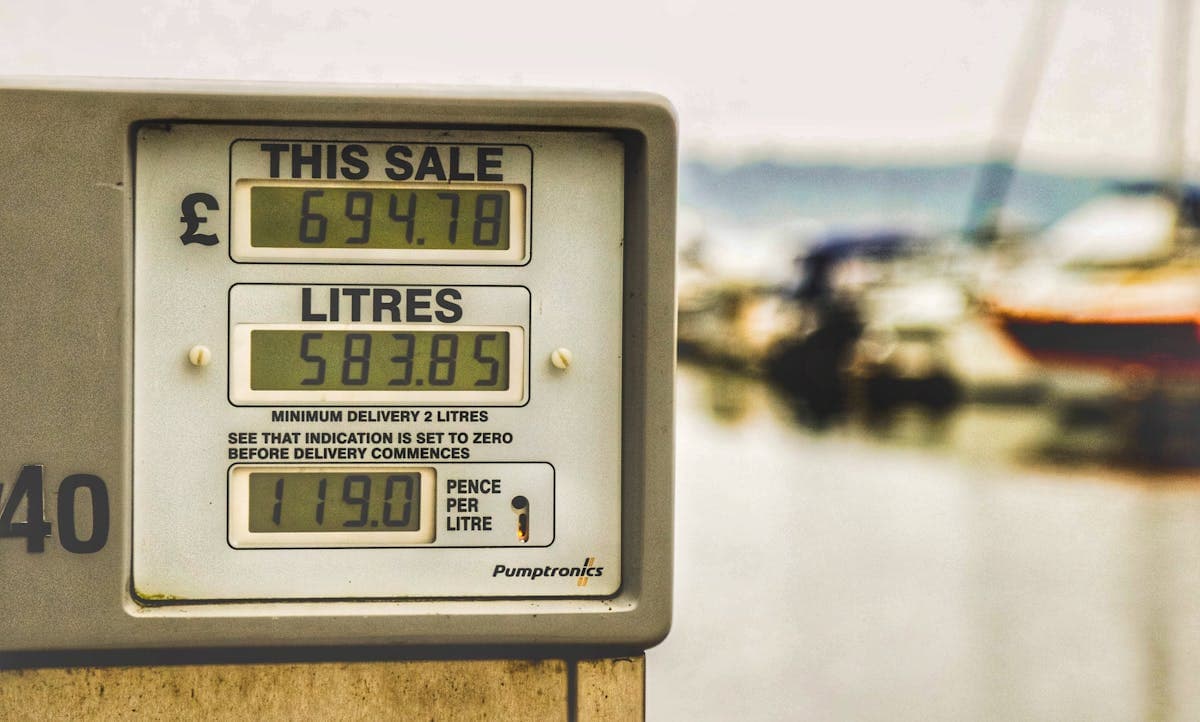
At the pump, Americans are feeling every cent of it. The national average for a gallon of regular gasoline hit $3.88 as of mid-March, up from $2.93 just a month earlier. That's almost a dollar more per gallon, or roughly $300 million in additional daily costs for American drivers. In California, drivers are paying close to $5.62 a gallon. Even in cheaper states like Oklahoma, the average has climbed to $3.24.
When people fill up their cars twice a week and the price keeps climbing, they don't need a Reuters poll to tell them something's wrong. They feel it directly in their wallets, and they assign blame accordingly.
Republicans Are Starting to Crack
The White House might take some comfort in the fact that Trump's overall standing with Republican voters hasn't collapsed. About one in five Republicans disapprove of his job performance, only slightly worse than the one in seven who said the same the week before. That's still a reasonably solid partisan floor.
But look at the cost of living numbers within the Republican base, and the cracks become obvious. Republican approval of Trump's handling of the cost of living dropped from 34 percent to 27 percent in just one week. That's a seven-point swing among his own voters on the issue they care about most. Meanwhile, the share of Republicans who think Trump is focusing too much on international matters climbed from 19 percent to 29 percent.
These aren't Democrats registering protest votes. These are Republican voters telling pollsters that the president they support is letting them down on groceries and gas.
The Iran War Isn't Producing a Rally Effect
In past conflicts, American presidents typically enjoyed a "rally around the flag" effect. When the U.S. went into Iraq in 2003, George W. Bush's approval soared. Even unpopular presidents tend to get a bump when American troops deploy abroad. Trump is getting the opposite.
Some 46 percent of respondents said the Iran war will make the country less safe in the long run. Only 26 percent said it would make America safer; the rest said it wouldn't matter much either way. The war has been running for nearly a month now, with strikes landing across the Middle East, Iranian missiles hitting Israel, and a 2,000-strong deployment of 82nd Airborne troops heading to the region. But instead of galvanizing support for the commander in chief, the conflict is dragging him down, primarily because its economic fallout is so visible and immediate.
The Strait of Hormuz blockade isn't some abstract geopolitical concept. It's the reason the number on the gas station sign keeps changing.
The 2024 Mandate Is Evaporating
Perhaps the most striking thing about these numbers is how they undermine the foundation of Trump's political identity. He ran on two things above all else: the economy and border security. The economy was supposed to be his signature strength, the thing that differentiated him from Biden. Voters gave him a clear mandate to bring down costs.
Now, 63 percent of Americans describe the economy as "somewhat weak" or "very weak." That includes 40 percent of Republicans, 66 percent of independents, and 84 percent of Democrats. Only 25 percent of Americans approve of his handling of the cost of living specifically.
For a president who promised to deliver relief from inflation and high prices, these numbers represent a direct repudiation of his core selling point. And unlike immigration policy or trade wars, where the effects take months or years to filter through, gas prices update in real time on giant signs visible from every highway in America.
Rubio Heads to France, but Allies Aren't Buying It
Against this backdrop, Secretary of State Marco Rubio is traveling to France this week for a G7 foreign ministers meeting near Versailles. The stated goal is to "advance key U.S. interests" and "discuss shared security concerns." The real agenda: try to convince America's closest allies to support, or at least stop criticizing, the Iran campaign.
It's going to be a tough sell. The other G7 nations have reacted coolly at best to the military operation. European countries are dealing with their own energy price shocks from the Hormuz closure, and none of them were consulted before the strikes began. This will be Rubio's first trip abroad since the war started on February 28, and he'll be walking into a room full of diplomats who have serious questions about whether this conflict has an endgame.
What to Watch
The next few weeks are going to be critical. Iran has rejected Trump's 15-point ceasefire proposal and countered with its own demands, including war reparations, sovereignty over the Strait of Hormuz, and guarantees against future attacks. The gap between the two positions is enormous. As long as the Strait stays closed and oil prices remain elevated, gas prices will keep climbing, and Trump's numbers will keep sliding.
Keep an eye on the Republican internals. If that cost-of-living disapproval among GOP voters keeps rising, it won't just be a polling problem; it'll become a midterm election problem. The 2026 midterms are only eight months away, and Republican candidates in swing districts are already starting to distance themselves from the administration's Iran policy. When a president's own party starts worrying about down-ballot damage, the political calculus in Washington can shift very quickly.
References
- Trump approval sinks to 36 percent in Reuters/Ipsos poll amid gas price spike, Iran war - The Hill
- Trump's Approval Hits New 36% Low as Fuel Prices Surge Amid Iran War - U.S. News
- Trump Economic Approval Rating Drops Below Biden's All-Time Low - Newsweek
- Why the latest polls on Trump's approval rating are especially brutal for the White House - MSNBC
- Trump's approval rating slides to lowest point of second term - The National
Get the Daily Briefing
AI, Crypto, Economy, and Politics. Four stories. Every morning.
No spam. Unsubscribe anytime.