The US Sent Two Aircraft Carriers to the Middle East, Then Sat Down With Iran for the 'Most Serious' Nuclear Talks Yet
Six Hours of Talking, Two Carriers Waiting
The United States and Iran wrapped up their third round of nuclear negotiations in Geneva on Thursday, and for the first time in this year-long diplomatic cycle, both sides are using words like "serious" and "progress." Iranian Foreign Minister Abbas Araghchi told state television it was "one of our most serious and longest rounds of negotiations," with nearly four hours of talks in the morning session and over two hours in the afternoon. Omani Foreign Minister Badr al-Busaidi, who is mediating, reported "significant progress."
The talks are moving to Vienna on Monday for technical-level discussions at the International Atomic Energy Agency, where teams will begin reviewing the elements of what could become a framework agreement. Araghchi confirmed that negotiators have begun discussing "elements of an agreement" and that the conversations now include both sanctions relief and nuclear issues, the two pillars that any deal would need to address.
What makes this round different from the first two is the backdrop. The United States has assembled the largest military force in the Middle East since the 2003 invasion of Iraq, and everyone at the table in Geneva knows it.
The Military Buildup
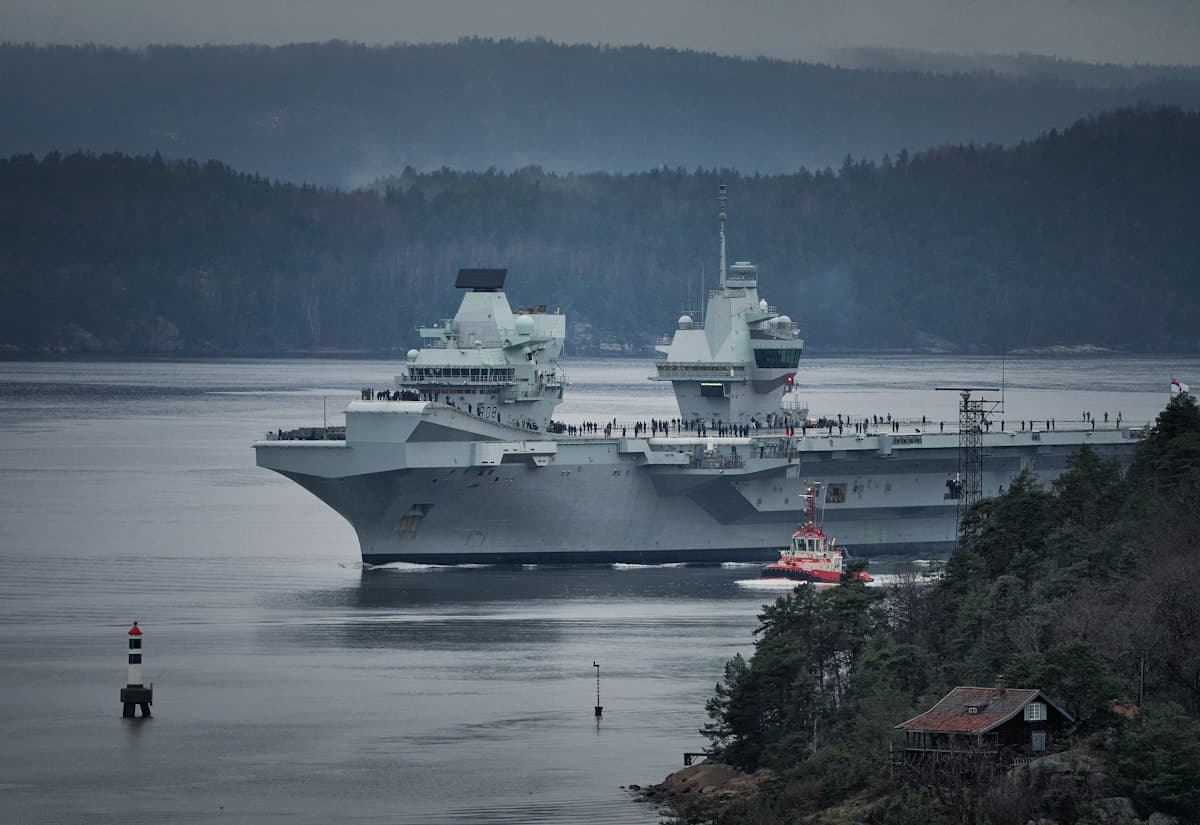
The scale of the American military deployment is extraordinary. The USS Abraham Lincoln carrier strike group has been stationed in the Arabian Sea since late January. President Trump ordered the USS Gerald R. Ford, the world's largest aircraft carrier, along with three destroyers and more than 5,000 additional military personnel to the region in February. The two-carrier deployment is uncommon and sends an unmistakable signal about operational readiness.
The Washington Post reported that over 150 U.S. aircraft have swept into the Middle East and Europe in recent weeks, including F-35s, F-22s, F-15s, and F-16s deployed from bases in the continental United States and across Europe. Dozens of refueling tankers have been positioned to support potential strike operations. The total force posture is designed to give the president the option of a rapid, large-scale strike on Iranian nuclear facilities if diplomacy fails.
Trump has been explicit about the dual-track approach: negotiate, but make clear that the alternative to a deal is military action. During his State of the Union address on Tuesday, he acknowledged the negotiations but offered no specifics, saying only that Iran "wants to make a deal" but hasn't said the "secret words" that would close an agreement.
What Iran Wants
Iran's negotiating position has been consistent across all three rounds: lift all sanctions first, including both U.S. unilateral sanctions and UN Security Council resolutions, and keep the discussions focused narrowly on the nuclear issue. Tehran insists that its ballistic missile program and its support for proxy groups across the Middle East are separate issues that should not be part of the nuclear negotiations.
A source close to the Iranian delegation told reporters that sanctions relief is "key to any agreement" and emphasized that "no facility and/or equipment will be destroyed" as part of any deal, because Iran's nuclear sites are registered with the IAEA and under international safeguards. This is a direct pushback against Washington's reported demand that Iran dismantle certain enrichment capabilities.
Iran's foreign minister arrived in Geneva as the U.S. announced new sanctions on vessels linked to Tehran's oil trade, a move designed to demonstrate that economic pressure will continue escalating until a deal is reached. The timing was deliberate: negotiate and squeeze simultaneously, making the cost of no-deal incrementally more painful for Tehran with each passing week.
What Washington Wants
The U.S. position is broader and more demanding. Washington wants Iran to verifiably halt its nuclear weapons program (the U.S. claims Iran is attempting to rebuild weapons capability, which Tehran denies), accept restrictions on enrichment levels and stockpiles, and, ideally, address its ballistic missile program and regional activities.
Vice President JD Vance stated in post-SOTU interviews that the administration's goals are "crystal clear" and that Trump's "preferred route" is diplomacy. But neither Vance nor Trump has publicly described what specific concessions the U.S. would offer in return for Iranian compliance. The gaps between what each side wants and what each side will accept remain significant.
The military buildup serves a specific strategic function: it narrows Iran's decision-making window. Without a credible military threat, Iran could drag out negotiations indefinitely, continuing to enrich uranium while running out the clock. With two carrier strike groups in range, Tehran has to factor in the possibility that the U.S. would actually strike, which changes the cost-benefit calculus of delay.
The Oman Channel
One of the underappreciated aspects of these negotiations is the role of Oman as mediator. The talks are technically "indirect," meaning the U.S. and Iranian delegations don't sit in the same room. Instead, Omani diplomats shuttle between them, carrying proposals and counterproposals.
Oman has played this role before. It was the Omani backchannel that facilitated the secret negotiations that led to the original 2015 Iran nuclear deal (JCPOA) under the Obama administration. Sultan Haitham bin Tariq has maintained Oman's position as a neutral broker trusted by both Washington and Tehran, and his foreign minister's presence in Geneva signals that the mediation is being taken seriously at the highest levels.
The indirect format has advantages: it gives each side the ability to make proposals without the political cost of being seen at the same table, and it allows the mediator to frame proposals in ways that make them more palatable to each side. The disadvantage is that it's slower and more prone to misunderstandings than direct talks.
Oil Markets and Geopolitical Risk
The Iran situation is already affecting energy markets. Oil prices have been volatile, with traders pricing in both the risk of a military conflict (which would disrupt Middle Eastern oil flows and send prices sharply higher) and the possibility of a deal (which could eventually bring sanctioned Iranian oil back to market, pushing prices lower).
The uncertainty creates a risk premium in oil prices that affects everything from gasoline costs to inflation expectations to Federal Reserve policy. If the talks in Vienna next week produce tangible progress toward a framework agreement, oil prices could ease, which would cool inflation expectations and strengthen the case for rate cuts. If the talks collapse and the military buildup intensifies, oil spikes, inflation fears return, and the Fed stays on hold longer.
For the broader economy, the Iran standoff is one of the most significant wildcards heading into the midterm election year. A successful deal would remove a major geopolitical risk premium from markets. A military confrontation would send shockwaves through global energy markets, supply chains, and risk assets. The outcome is binary enough that markets are struggling to price it, which is why volatility indices for oil and defense stocks remain elevated.
What Monday in Vienna Means
The decision to move technical discussions to Vienna and the IAEA is significant. It means the two sides have progressed past general posturing and into the specifics of what an agreement would actually look like. IAEA technical teams can verify enrichment levels, inspect facilities, and provide the independent monitoring framework that any deal would require.
If the Vienna technical discussions go well, a fourth round of political-level talks could follow within weeks. If they stall on verification requirements or sanctions sequencing, the diplomatic window could narrow quickly, especially with the U.S. military buildup creating its own timeline pressure.
The midterm elections in November add another clock. Any deal Trump makes with Iran will face scrutiny from both parties: Republicans who want maximum pressure without concessions, and Democrats who will compare any agreement to the JCPOA that Trump pulled out of in 2018. The political incentive to reach a deal before the midterms is real, but so is the political risk of making concessions that can be attacked as weakness.
For now, the fact that both sides are calling the talks "serious" and "productive," and that they've agreed to meet again in four days, is the most encouraging signal since the negotiations began. Whether it leads to a deal or a deadline remains the most consequential foreign policy question of 2026.
References
- US and Iran wrap up another round of indirect nuclear talks as American forces mass in Mideast - Washington Post
- U.S. and Iran hold nuclear talks as Trump raises pressure with military buildup - NBC News
- US-Iran talks updates: 'Longest, most serious' round ends, Tehran says - Al Jazeera
- Over 150 U.S. aircraft sweep into Europe, Middle East as Trump mulls strikes - Washington Post
- U.S. and Iran to hold a third round of nuclear talks in Geneva - NPR
Get the Daily Briefing
AI, Crypto, Economy, and Politics. Four stories. Every morning.
No spam. Unsubscribe anytime.