Iran and the U.S. Made Progress in Geneva. Iran Also Closed the Strait of Hormuz.
Talking and Flexing at the Same Time
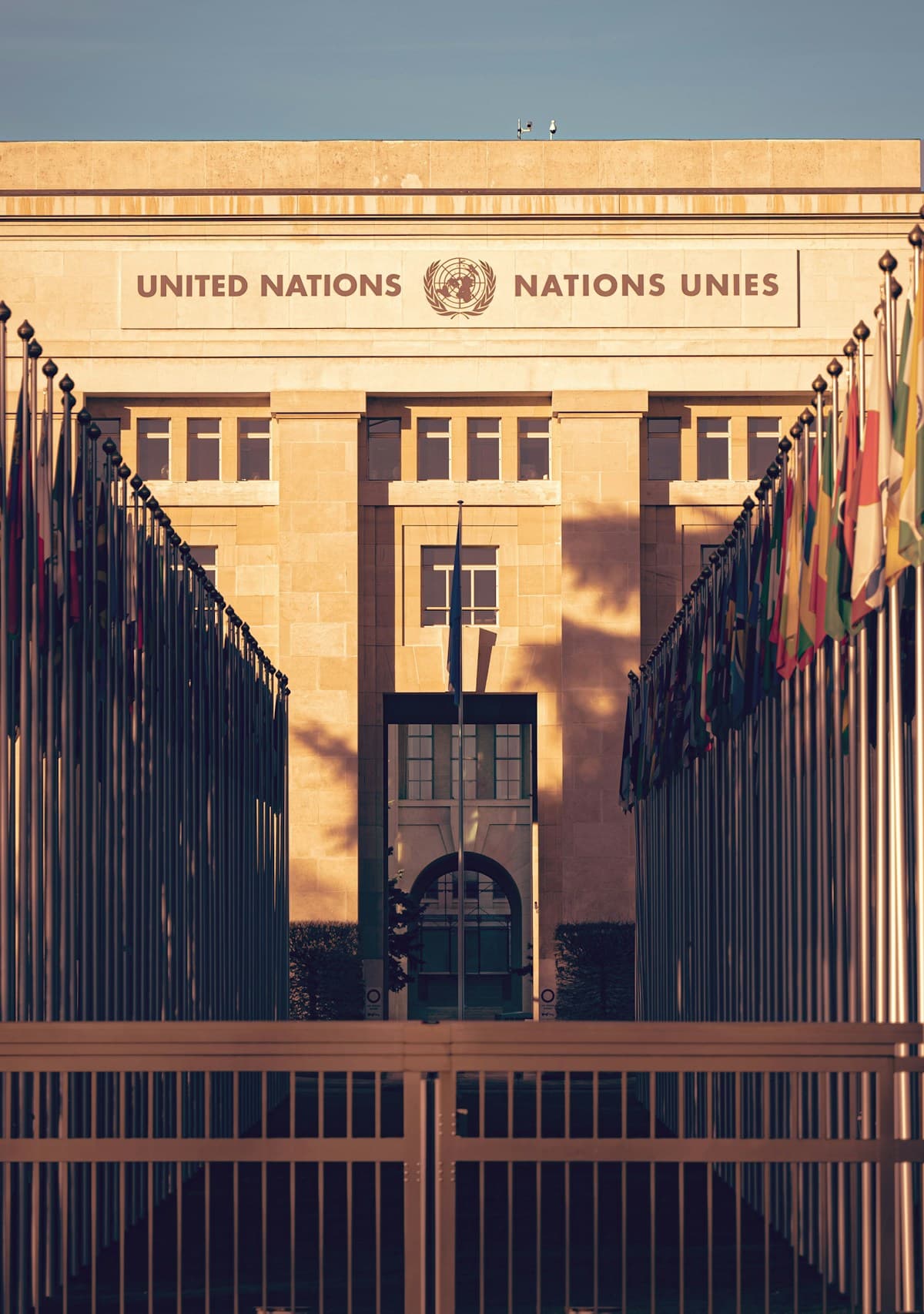
The second round of U.S.-Iran nuclear talks concluded in Geneva this week with something unusual: both sides said they made progress. Iran's Foreign Minister Abbas Araghchi called it "good progress" and said both sides had agreed on "guiding principles" for a potential nuclear deal. White House Press Secretary Karoline Leavitt was more measured, describing it as "a little progress" while noting that "we're still very far apart on some issues."
But here's the part that captures the full picture of this negotiation: while Araghchi was in Geneva talking diplomacy, Iran's Revolutionary Guard Corps was conducting military drills in the Strait of Hormuz and temporarily shut down parts of the world's most critical oil chokepoint. About 20 million barrels of oil per day transit through that waterway, roughly one fifth of global oil flows. It was the first time Iran had partially closed the strait, and the timing was not coincidental.
The talks were held at Oman's embassy in Geneva, with Oman mediating. The U.S. delegation was led by special envoys Jared Kushner and Steve Witkoff, the same pair currently handling the Ukraine peace process. The dual assignment says something about the Trump administration's approach to foreign policy: the same dealmakers, different crises, the same transactional framework applied across the board.
What Was Actually Agreed
The concrete outcome is modest but meaningful: both sides agreed on a set of guiding principles that will serve as the framework for negotiating the text of a potential agreement. Iran offered to return within two weeks with detailed proposals "to address some of the open gaps in our positions." Araghchi said the two sides would begin preparing draft texts to exchange before the next round.
Compared to the first round of talks in Oman on February 6, the Geneva session was described as "completely serious" with "a more constructive atmosphere." That's diplomat speak for: the first round was mostly posturing, and this one got into substance. But even Araghchi cautioned that progress doesn't mean a deal is imminent. "This does not mean that we can reach an agreement quickly," he said, "but at least the path has begun."
The core of the negotiation is straightforward in concept and enormously complicated in practice. The U.S. wants Iran to verifiably limit its nuclear program, particularly its uranium enrichment activities, in exchange for sanctions relief. Iran wants the sanctions lifted first, or at least simultaneously, and wants guarantees that any agreement can't be unilaterally torn up by the next American president, as Trump himself did with the JCPOA in 2018.
The Shadow of Military Force
The talks are happening under the explicit threat of American military action. Trump has sent a second aircraft carrier strike group to the Middle East in recent days, a deployment that serves as both a military positioning move and a negotiating signal. Washington has stated repeatedly that "military action remains an option if diplomacy fails."
This is not an empty threat. In June 2025, Israel launched an unprecedented bombing campaign against Iranian nuclear sites, triggering a 12 day war. The White House declared Iranian nuclear sites "obliterated" after the strikes. But satellite imagery and intelligence assessments suggest Iran is already rebuilding the damaged facilities and has announced steps to restore its nuclear program. The Israel Alma Center's February 2026 assessment describes Iran as being in "the race to rebuild the nuclear and missile array."
The nuclear facts on the ground are sobering. Before the June strikes, Iran had accumulated enough enriched uranium for an estimated nine nuclear weapons if further enriched to 90%. Iran was enriching to 60%, far beyond the 3.67% permitted under the JCPOA and past the point where over 90% of the enrichment work toward weapons grade is already done. The IAEA estimated Iran's nuclear breakout time, meaning the time to produce enough fissile material for a weapon, at "almost zero." However, actually building a deliverable weapon would take significantly longer, likely several months to years.
Netanyahu has publicly demanded that any U.S. deal must include the "dismantling" of Iran's nuclear program, a maximalist position that most diplomats consider unrealistic but that constrains Washington's negotiating flexibility.
The Strait of Hormuz Card
Iran's decision to partially close the Strait of Hormuz during the Geneva talks was the most significant geopolitical signal of the week. The Revolutionary Guard's "Smart Control of the Strait of Hormuz" drill forced shipping delays and sent oil prices higher initially, though Brent crude later settled down, falling 1.8% to $67.48 a barrel as the talks concluded without escalation.
Industry experts said the temporary closure caused "minor delays to inbound shipping" with no major trade disruption. But the message was clear: Iran holds leverage over global energy markets, and any military conflict would activate that leverage. Analysts cautioned that an extended closure or escalation could lift crude prices by 15% to 20%, with limited pipeline capacity offering only a partial cushion for affected producers.
Iran has repeatedly threatened to close the waterway in retaliation for any attack, and this week's drill was essentially a rehearsal. It demonstrated both capability and willingness while maintaining plausible deniability as a "routine exercise." For oil importing nations across Asia and Europe, the message was impossible to miss: the cost of a military confrontation with Iran extends far beyond the Middle East.
What Tehran Wants
Iran's negotiating position is shaped by the June war, the sanctions regime, and domestic politics. The economy is under severe strain. The currency has weakened substantially, sanctions pressure is intensifying, and the costs of rebuilding military infrastructure after the June strikes are enormous. Iran needs sanctions relief, and it needs it before the economic situation becomes politically unsustainable for the regime.
At the same time, Iran cannot be seen as capitulating to American threats. The nuclear program has become a matter of national pride and regime legitimacy. Any deal that looks like surrender would face fierce domestic opposition, particularly from hardliners within the IRGC who view the nuclear capability as the ultimate security guarantee.
The Oman mediation channel is significant because it provides cover for both sides. Direct U.S.-Iran talks carry political costs in both Washington and Tehran. Having Oman facilitate allows both governments to maintain that they are not negotiating with the enemy, merely communicating through a trusted intermediary. It's a fiction, but a useful one.
The Broader Chessboard
These negotiations don't exist in isolation. Kushner and Witkoff are simultaneously handling the Ukraine peace process, and the Trump administration's Gaza reconstruction initiative through the Board of Peace is actively reshaping Middle East dynamics. Trump announced this week that Board of Peace members have pledged $5 billion for Gaza reconstruction, with Indonesia committing up to 8,000 troops for a stabilization force.
The interconnections matter. Saudi Arabia and the Gulf states are watching the Iran talks closely because any deal that reintegrates Iran into the global economy would affect their strategic position. Israel's demand for Iran's nuclear dismantlement is partly driven by its own security calculus but also by its broader competition with Tehran for regional influence. Russia and China, both of which maintain relationships with Iran, have their own interests in the outcome.
For the Trump administration, the Iran track is part of a larger strategic repositioning. The White House has signaled its desire to pivot attention toward China and the Indo Pacific. Resolving or at least containing the Iran issue, along with ending the Ukraine conflict, would free up diplomatic and military resources for that pivot. The question is whether the administration's transactional approach to diplomacy can produce lasting agreements or merely temporary arrangements that unravel when the incentive structures change.
What Happens Next
Both sides have agreed to continue talks, with Iran planning to present detailed proposals within two weeks. The trajectory is cautiously positive: guiding principles have been established, the atmosphere has improved, and draft texts will be exchanged. But the distance between "guiding principles" and a signed agreement is enormous, and the military dimensions of the situation create constant risk of derailment.
The key variables to watch are: whether Iran's detailed proposals represent genuine flexibility or repackaged maximalist demands, whether the U.S. military buildup in the region escalates or stabilizes, whether Israel takes independent action that disrupts the diplomatic track, and whether Iran conducts additional Strait of Hormuz demonstrations.
A deal before the U.S. midterm elections, which the administration clearly wants, would require both sides to make concessions they haven't yet signaled willingness to make. The more likely near term outcome is a continuation of the current dynamic: periodic talks that generate enough progress to prevent a crisis while falling short of a comprehensive agreement. In the Middle East, that often passes for good news.
References
- U.S. and Iran say progress made in Geneva nuclear talks - Axios
- Iran says good progress made in nuclear talks with US in Geneva - Al Jazeera
- Iran partially closes Strait of Hormuz as Tehran holds talks with U.S. - CNBC
- Amid threat of U.S. attack, Iran nuclear talks proceed without breakthrough - Washington Post
- Strait of Hormuz: How Can Iran Close It? How Would the Oil Market Be Affected? - Bloomberg
Get the Daily Briefing
AI, Crypto, Economy, and Politics. Four stories. Every morning.
No spam. Unsubscribe anytime.