Ukraine, Russia, and the U.S. Sit Down in Geneva. Nobody Expects a Breakthrough.
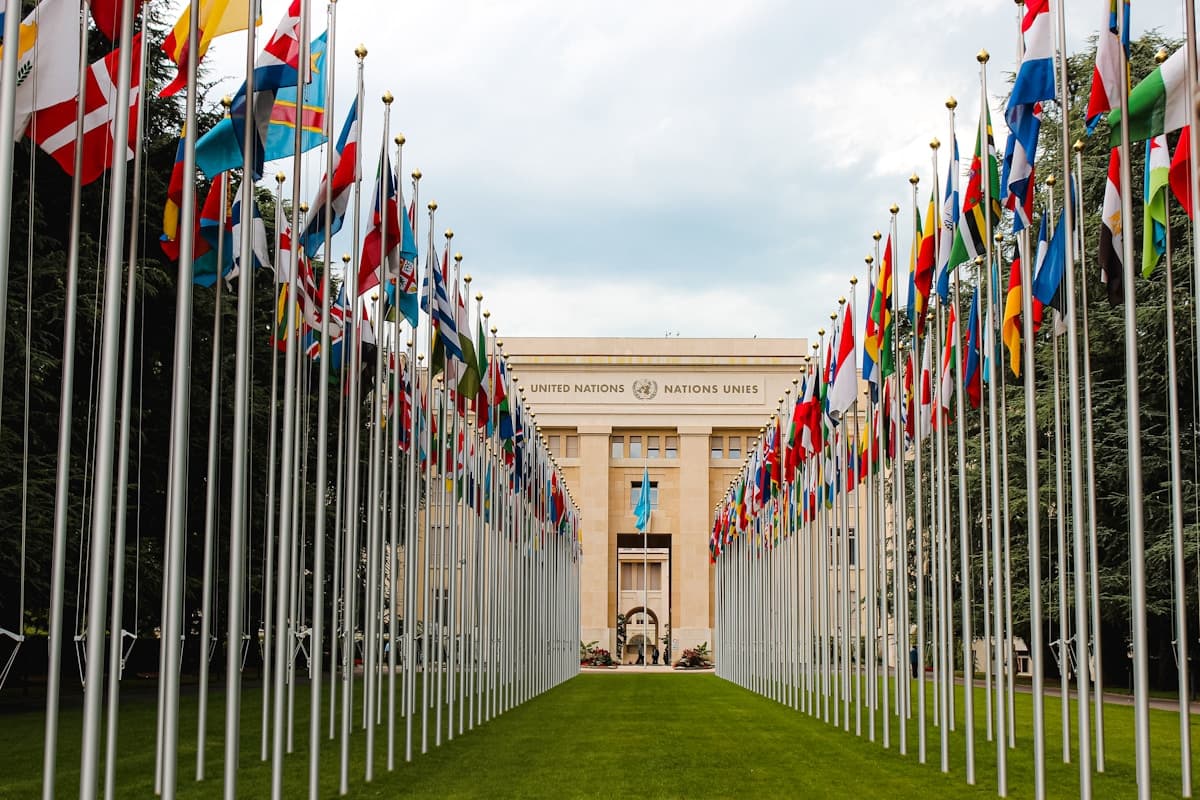
Round Three Opens in Geneva
Delegations from Ukraine, Russia, and the United States sat down in Geneva today for the third round of trilateral peace talks aimed at ending a war that has now stretched past four years. Nobody involved is publicly predicting a breakthrough, and privately, officials on all sides describe the gap between the parties as enormous. But the talks are happening, and in the context of this conflict, that alone counts for something.
Ukraine's delegation is led by Rustem Umerov, secretary of the National Security and Defence Council, alongside Kyrylo Budanov, Zelenskyy's chief of staff and former head of military intelligence. Senior presidential aide Serhiy Kyslytsya is also present. The Russian side is headed by Vladimir Medinsky, a hawkish former culture minister who led Moscow's team during the ill fated Istanbul talks in March 2022. The U.S. delegation includes special envoys Steve Witkoff and Jared Kushner.
The talks are scheduled for today and tomorrow, February 17 and 18. They follow two earlier rounds held in Abu Dhabi in January and early February, both described as "constructive" by all parties, which in diplomatic language means nothing was agreed on.
The June Deadline
Hovering over everything is the deadline that Washington has imposed. On February 8, Zelenskyy revealed that the United States had given both Ukraine and Russia a June deadline to reach a peace agreement. The timing is not coincidental: midterm elections are approaching, and the Trump administration wants to show voters a foreign policy win before the campaign season heats up.
The deadline creates fundamentally different pressures on each side. For Ukraine, it means accepting that it may have to make painful territorial concessions under intense time pressure. For Russia, it creates an incentive to stall, since Putin's forces continue to make incremental gains on the ground in the Donbas region. The longer the talks drag on, the more territory Russia controls when the music stops.
Zelenskyy has been publicly vocal about his frustration. "The Americans often return to the topic of concessions," he said on February 15. "Too often those concessions are discussed in the context only of Ukraine, not Russia." He added that the U.S. pushes Kyiv "too often" while Moscow faces far less pressure. It's the bluntest public criticism of Washington from a Ukrainian leader since the full scale invasion began.
The Land Question
The core issue on the table in Geneva is the most intractable one: who controls the Donbas. Russia currently occupies most of the Donetsk and Luhansk regions, along with Zaporizhzhia and Kherson in the south. Ukraine still controls roughly one fifth of the Donetsk region.
Russia's position, articulated through what negotiators call the "Anchorage formula," calls for freezing the frontline and maintaining Russian control over all occupied territories. Moscow wants Ukraine to withdraw its forces from the remaining parts of Donetsk. For Ukraine, accepting this would mean formally ceding territory it still controls, a political impossibility for Zelenskyy's government.
A more creative proposal has emerged: the idea of an economic zone in the Donbas, first floated by the U.S. side. Under this concept, the disputed areas would receive a special economic status that avoids the binary question of sovereignty while allowing economic activity to resume. Russia reportedly agreed for the first time to discuss this proposal during the Abu Dhabi round, though the details remain vague and the devil is very much in the details.
The Zaporizhzhia nuclear power plant adds another layer of complexity. It's Europe's largest nuclear facility, currently under Russian military control but operated with significant international safety concerns. Neither side wants to give it up, and the question of who controls it has implications that extend far beyond the bilateral negotiation.
The Energy Ceasefire
Ukraine plans to raise a specific proposal in Geneva: an energy ceasefire. The concept is straightforward: both sides agree to stop targeting each other's energy infrastructure while broader negotiations continue. Russia has been systematically attacking Ukraine's power grid throughout the war, causing devastating blackouts during winter months. Ukraine has responded with strikes on Russian oil refineries and energy facilities.
Moscow has repeatedly rejected this idea in the past, for a strategic reason: attacks on Ukraine's energy grid are one of Russia's most effective pressure tools. Agreeing to stop them without getting anything concrete in return would remove leverage. But the proposal serves a useful diplomatic function for Ukraine: it positions Kyiv as the side pushing for humanitarian measures while framing Russia's refusal as callous.
Whether Russia shows any flexibility on the energy ceasefire in Geneva will be one of the key signals to watch from these talks. Even a limited agreement, say protecting civilian power infrastructure while allowing strikes on military targets, would be a meaningful confidence building measure.
The Medinsky Return
Russia's choice of chief negotiator is worth noting. Vladimir Medinsky led Moscow's delegation during the Istanbul talks in March 2022, the closest the two sides came to a ceasefire in the early months of the war. Those talks collapsed amid mutual accusations of bad faith, and Medinsky has since become one of the more forceful public advocates of Russia's war aims.
His return to the negotiating table can be read two ways. The optimistic interpretation is that Putin is sending someone with the authority and experience to actually make a deal. The pessimistic interpretation, which most Western analysts favor, is that Medinsky's role is to present Russia's maximalist demands and gauge how much pressure Washington is willing to put on Kyiv.
The Russian delegation also includes new additions to the team, which Ukrainian analysts have interpreted as a sign that Moscow may be recalibrating its approach. But recalibrating doesn't necessarily mean compromising. It could simply mean finding more effective ways to achieve the same objectives.
What Washington Actually Wants
The Trump administration's position is harder to pin down than it appears. Publicly, Washington says it wants a "fair and lasting peace." Practically, the administration's actions suggest its primary goal is ending the conflict quickly enough to claim credit before the midterms, even if that means pressuring Ukraine to accept terms it considers unjust.
The U.S. envoys, Witkoff and Kushner, bring a deal making orientation to the talks. Neither has deep experience in Eastern European diplomacy, but both are close to Trump and have the authority to make commitments on behalf of Washington. The presence of Kushner, in particular, signals that the White House views this through the lens of transactional diplomacy rather than the alliance based framework that defined U.S. policy toward Ukraine under Biden.
There's also a broader strategic calculus at play. The administration has been signaling that it wants to pivot U.S. attention toward China and the Indo-Pacific. Ending the Ukraine conflict, even on terms that critics would call a Russian victory, would free up diplomatic bandwidth and potentially military resources for what the White House sees as the more important strategic competition.
What Happens Next
The most likely outcome of the Geneva round is what diplomats call "framework progress," agreement on the broad structure of further negotiations without resolution of the core issues. Both sides may agree on additional rounds of talks, possibly in Miami as the U.S. has proposed, and potentially identify specific topics for dedicated working groups.
A ceasefire by June remains possible but unlikely at the current pace. The territorial question is simply too fundamental and the positions too far apart. What's more plausible is a staged approach: an initial agreement on humanitarian measures (prisoner exchanges, energy ceasefire), followed by a temporary military freeze, with the territorial settlement deferred to a later phase.
The wild card is Trump himself. His engagement with the process has been erratic, oscillating between expressions of sympathy for Ukraine and public frustration with both sides. A presidential intervention, either a dramatic summit or a public ultimatum, could change the dynamics overnight. But it could also blow up the careful diplomatic architecture that his envoys are building.
For now, the delegations are at the table in Geneva. The expectations are low, the stakes are existential for Ukraine, and the clock is ticking toward June. If anything meaningful comes out of these talks, it won't be announced with a grand ceremony. It will be a quiet procedural step that makes the next step possible. That's how peace processes work, when they work at all.
References
- Peace talks round three: Ukraine-US-Russia Geneva meeting's key topics - Euronews
- Trump ups pressure on Kyiv as Russia, Ukraine hold peace talks in Geneva - Al Jazeera
- Land in focus at new Geneva peace talks between Russia and Ukraine - NBC News
- U.S. gave Ukraine and Russia June deadline to reach peace agreement, Zelenskyy says - NPR
- Zelenskyy says US 'too often' pushes Ukraine, not Russia, for concessions - Al Jazeera
Get the Daily Briefing
AI, Crypto, Economy, and Politics. Four stories. Every morning.
No spam. Unsubscribe anytime.