Europe's Iran War Crisis: Starmer at -48%, Cyprus Under Drones, and NATO Can't Agree on Anything
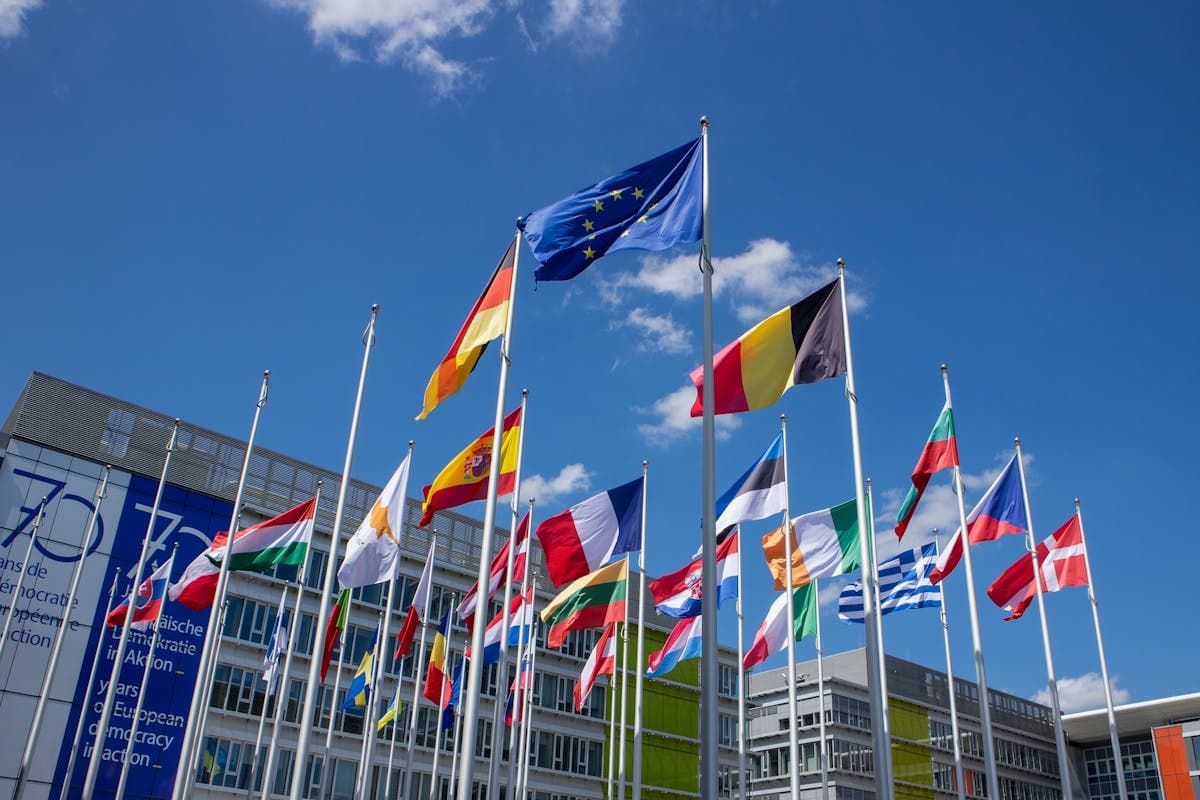
Europe Didn't Start This War, but It's Paying for It
Two weeks into the Iran conflict, the war's political shrapnel is hitting Europe harder than anyone in Washington seems to notice. British Prime Minister Keir Starmer is polling at historic lows after allowing U.S. forces to use British bases. A Hezbollah drone has struck RAF Akrotiri in Cyprus, dragging a quiet Mediterranean island into the conflict zone. Cyprus's tourism industry, which accounts for 14% of GDP, is hemorrhaging bookings. And across the continent, European leaders can't agree on whether to stay out, lean in, or pretend the whole thing isn't happening.
The fundamental problem is structural: the United States launched its military campaign against Iran with little to no consultation with its transatlantic allies, and now those allies are being forced to pick sides in a conflict they didn't choose, with domestic publics who overwhelmingly don't want any part of it.
Starmer's Worst Decision
The timeline of events on March 1-2 tells the story of Starmer's political nightmare in miniature. On the afternoon of March 1, the Prime Minister stood before the House of Commons and announced that Britain would allow the United States to use British military bases for "limited defensive purposes." His exact words: "The United States has requested permission to use British bases for that specific and limited defensive purpose. We have taken the decision to accept this request to prevent Iran from firing missiles across the region, killing innocent civilians."
Hours later, a Shahed-type one-way attack drone, launched by Hezbollah from Lebanon, struck the runway at RAF Akrotiri in Cyprus. Additional drones were launched toward Cyprus on March 1 and March 4, with some intercepted. The message was immediate and unmistakable: allowing your bases to be used in the war means your bases become targets in the war.
The political damage has been devastating. A YouGov poll shows 49% of the British public opposes U.S. military action in Iran, versus 28% who support it. Exactly half the public opposes letting the U.S. use British bases, with only 30% in favor. A More In Common poll found that 74% of UK voters want either no British involvement or purely defensive engagement. Starmer's overall approval has cratered to a net rating of -48%, with 68% saying he's doing a bad job. An Ipsos poll was even grimmer: just 13% satisfied, 79% dissatisfied, for a net approval of roughly minus 66.
The irony is that Starmer framed his decision as limited and defensive. The public isn't buying it. When a drone strikes a British base within hours of that announcement, the word "limited" loses all credibility.
Cyprus: Collateral Damage in Someone Else's War
If you want to understand how a war between the United States, Israel, and Iran can devastate a country that has nothing to do with any of it, look at Cyprus. The Mediterranean island's misfortune is geographic: it sits close enough to the conflict zone that its airspace, bases, and tourism industry are all directly affected, but it has zero ability to influence the outcome.
The flight cancellations tell the story in hard numbers. On a single day in early March, 44 flights were cancelled at Larnaca and Paphos airports, affecting routes to Tel Aviv, Beirut, Doha, Dubai, Amman, and even London Heathrow. The cancellations aren't because Cypriot airspace is closed; it's technically still open. The problem is that eastbound routes through Lebanon, Israel, and the Gulf have become commercially unviable because of closed airspace and soaring insurance premiums on routes that overfly active conflict zones.
Tourism is getting hammered. Hotel bookings at some properties dropped 25% to 30% immediately after the conflict began. Short-term rental operators report cancellation waves, with one reporting 50 nights cancelled by 13 different guests in a single week, cutting monthly revenue by at least 35%. Tour operators are warning that the knock-on effects could devastate Easter bookings, which is catastrophic timing for a country where tourism drives such a large share of the economy.
Cypriot President Nikos Christodoulides tried to distance his country from the conflict, calling it "an unprecedented crisis" for the region. But distancing is hard when British military bases on your soil are being targeted by drones. Protests have erupted under the banner "British Bases Out", with demonstrators arguing that the UK's decision to support U.S. operations has turned Cyprus into a target without the Cypriot government's consent.
Europe's Three-Way Split
Zoom out from the UK and Cyprus and the picture across Europe is one of remarkable disunity. The continent's three major powers, France, Germany, and the United Kingdom, are each taking fundamentally different approaches to the conflict, and none of them are working particularly well.
France has positioned itself as the most legally cautious of the three. President Macron warned that military action outside international law "risks undermining global stability" and called for emergency UN discussions. But France's position has a contradictory edge: Foreign Minister Jean-Noel Barrot said France is "ready" to defend Gulf countries and Jordan against Iran, and Macron promised to "unblock the Strait of Hormuz." It's unclear how you simultaneously criticize the war's legal basis while offering to join the naval operations that flow from it.
Germany under new Chancellor Friedrich Merz has been the most cautious. The government explicitly stated it has no intention of participating offensively in the campaign and noted it doesn't have the military resources to do so even if it wanted to. But behind the scenes, Merz has been discussing with Macron the possibility of extending France's nuclear deterrent to other European allies, a conversation that only makes sense if European leaders are seriously contemplating a world where the Iran conflict escalates into something that threatens NATO territory directly.
The UK is the most exposed because it's the only European country that has actively contributed to operations by allowing base access. That decision has produced the most concrete backlash: a drone strike on sovereign British territory, public opinion in freefall, and a prime minister who looks like he was dragged into a conflict without thinking through the consequences.
The NATO Question Nobody Wants to Answer
The drone strike on RAF Akrotiri raised a question that European leaders have been desperately trying to avoid: does an attack on a British base in Cyprus constitute grounds for invoking NATO Article 5, the collective defense clause that says an attack on one member is an attack on all?
The legal answer is arguably yes. Akrotiri is British sovereign territory, and it was struck by a hostile military drone. But no one in Europe wants to go down that path. Invoking Article 5 over a conflict that most European publics oppose would be politically explosive. Turkey, a NATO member that shares a border with both Iraq and Syria, has been particularly vocal about not being dragged into the conflict. Even countries that are rhetorically supportive of the U.S. position have been careful to frame their involvement as "defensive" rather than offensive, precisely to avoid triggering the collective defense mechanism.
The joint statement from France, Germany, and the UK pledged to "take steps to defend their interests and those of their allies" and left open the possibility of "necessary and proportionate defensive action to destroy Iran's capability to fire missiles and drones at their source." That language is carefully calibrated to sound tough while committing to almost nothing. It's the diplomatic equivalent of waving a sword while backing slowly toward the exit.
Domestic Politics Are Driving Everything
What's happening across Europe isn't really a foreign policy debate. It's a domestic politics crisis triggered by a foreign policy event. Every European leader is making decisions about the Iran war based primarily on what their voters will tolerate, not on strategic assessments of the conflict itself.
In the UK, Starmer's Labour Party is watching its support erode among younger and Muslim voters who are horrified by the civilian casualties in Iran. 59% of 2024 Labour voters support Starmer's response, but that means 41% don't, and in a political environment where Labour won power partly by consolidating the anti-war vote, those numbers are dangerous.
Nigel Farage's Reform UK initially supported the military action, then executed what commentators called a "humiliating U-turn" as polling showed the public turning against the war. That flip tells you everything about how volatile the politics of this conflict are in Britain. When the populist right decides that opposing a war is more popular than supporting it, the prime minister's political ground is disappearing fast.
Across Europe, the 2026 election calendar is amplifying every decision. Denmark votes on March 24. France's municipal elections are being treated as a barometer for the 2027 presidential race, with Marine Le Pen's Rassemblement National using the war to attack Macron's credibility. U.S. midterm elections in November are already being shaped by the conflict's impact on gas prices and the economy.
What to Watch
The next critical moment for European politics will be if another NATO member's territory is attacked. A second strike on Akrotiri, or an attack on any installation in a NATO country, would make the Article 5 question impossible to avoid. Watch Starmer's poll numbers closely; if he drops below -50 net approval, there will be serious discussion within Labour about whether his leadership can survive a war that most of his voters oppose.
Watch Cyprus's Easter tourism season. If bookings collapse further, it becomes a concrete, measurable example of how the war is damaging a European economy with no connection to the conflict. And watch Macron's Hormuz gambit. If France actually deploys naval assets to the strait, it would represent a dramatic escalation of European involvement and could reshape the conflict's dynamics entirely. Europe didn't choose this war, but the war is increasingly choosing Europe.
References
- UK public opinion on the US-Iran conflict - YouGov
- Europe's Disjointed Response to the War With Iran - Council on Foreign Relations
- RAF site in Cyprus hit by drone hours after Starmer allows US to use British bases - ITV News
- How the Iran war is affecting tourism in Cyprus - Euronews
- After Iran's warning, Europe fails to unite on war launched by US, Israel - Al Jazeera
Get the Daily Briefing
AI, Crypto, Economy, and Politics. Four stories. Every morning.
No spam. Unsubscribe anytime.