Six Americans Are Dead, the U.S. Embassy in Riyadh Got Hit by Drones, and Congress Might Actually Vote
The Death Toll Is Rising
The U.S. military confirmed on Monday that six American service members have been killed since Operation Shield of Judah began on February 28. That's double the count from just 48 hours ago. The Pentagon has not released details about the circumstances of the most recent deaths, but Iran's retaliatory strikes have targeted 27 U.S. military installations across the Middle East, including bases in Jordan, Kuwait, Bahrain, Qatar, Iraq, Saudi Arabia, and the UAE.
President Trump addressed the deaths in a speech from the East Room on Monday, warning that the operation could take "four to five weeks" and that "there will likely be more" casualties. Secretary of State Marco Rubio went further on Capitol Hill, telling reporters that "the hardest hits are yet to come from the U.S. military." The framing from the administration is clear: this is going to get worse before it gets better, and the public should prepare accordingly.
Drones Hit the U.S. Embassy in Saudi Arabia
Early Monday morning local time, two drones struck the U.S. Embassy compound in Riyadh, Saudi Arabia. The Saudi Ministry of Defence confirmed the attack, reporting "limited fire and minor damage" to the building. Because the strike came during overnight hours, the embassy was largely empty, and no injuries have been reported.
The attack is significant not for its damage but for its symbolism. Striking a U.S. Embassy in a Gulf ally's capital is a major escalation. Iran has been hitting military targets across the region since the operation began, but extending strikes to diplomatic facilities crosses a line that the international community generally treats as inviolable. The Vienna Convention on Diplomatic Relations, which protects embassies, is one of the oldest and most widely respected norms in international law.
The State Department's response was to issue its broadest travel advisory of the conflict so far, urging Americans to "DEPART NOW" from Israel, Bahrain, Egypt, Iraq, UAE, Saudi Arabia, Kuwait, Lebanon, Qatar, Oman, Syria, Yemen, and Jordan. That's 13 countries across the entire Middle East, a virtual region-wide evacuation call.
The War Is Expanding
What started as targeted strikes on Iran's nuclear and military infrastructure has expanded into a multi-front conflict. Here's where things stand as of Monday evening:
Iran is conducting "Truthful Promise 4," its retaliatory campaign involving missiles and drones aimed at Israel, Gulf states, and U.S. military installations. The strikes on Gulf countries hosting American bases, particularly the UAE, Qatar, Kuwait, and Saudi Arabia, have turned those nations into active participants in a conflict many of them tried to avoid.
Hezbollah has entered the fight. The IDF confirmed it conducted a precision strike in Beirut on Sunday night that killed Hussein Makled, the head of Hezbollah's intelligence headquarters. Israel announced strikes against Hezbollah targets in Lebanon after accusing the group of firing rockets at Israeli territory. The opening of a northern front with Hezbollah is what Israeli defense planners have long described as their worst-case scenario: fighting Iran and its most capable proxy simultaneously.
Israel continues operations both in Iran and on its own borders, managing threats from multiple directions. The U.S. has pledged to send additional troops to the region, though the specifics haven't been disclosed.
Kaine Wants a Vote, and He Might Get One
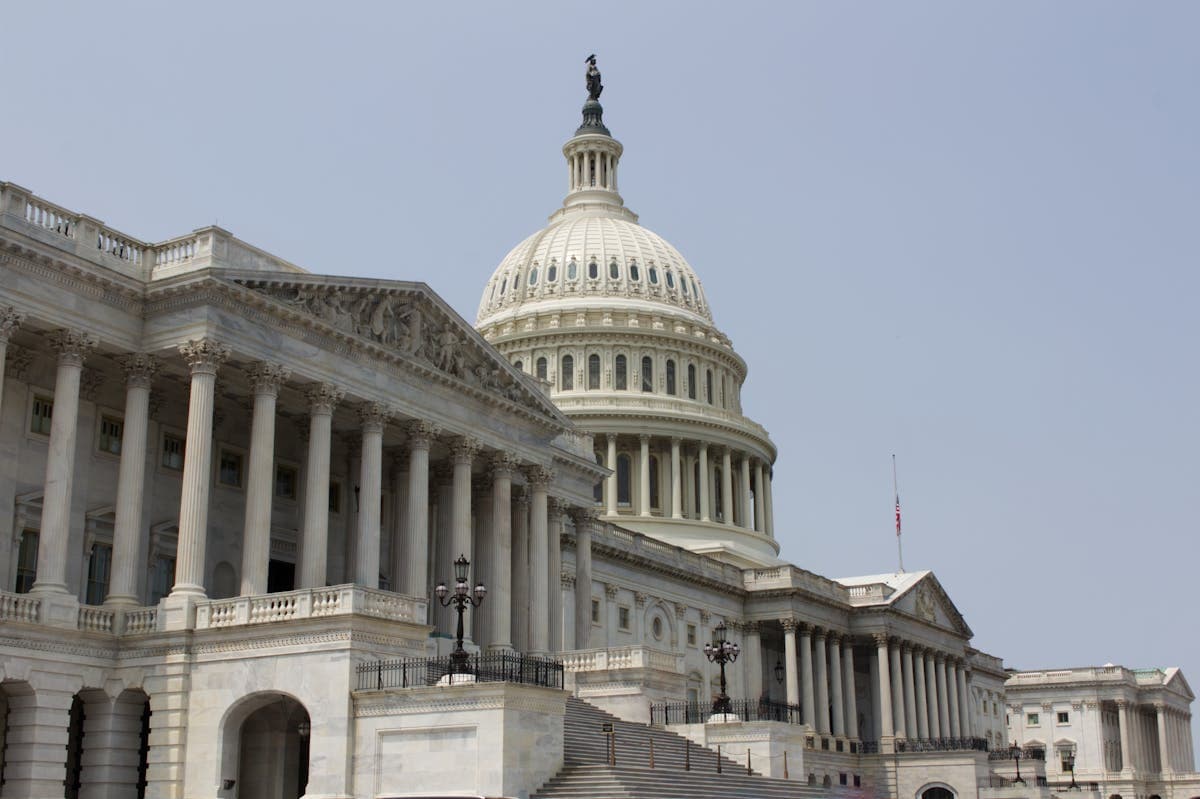
Senator Tim Kaine of Virginia, the leading Congressional voice on war powers for over a decade, is forcing a vote on a War Powers Resolution that would require the president to either get Congressional authorization for the Iran operation or withdraw U.S. forces within a set timeframe. The vote could come as early as Tuesday but may slip to Wednesday.
Kaine's argument is constitutional and unambiguous: "This is an illegal war. The Constitution says we're not supposed to be at war without a vote of Congress." He's co-sponsoring the Senate resolution alongside Minority Leader Chuck Schumer and Senator Adam Schiff. A parallel effort is underway in the House.
The political dynamics are complicated. Democrats are largely unified behind the resolution, framing it as a check on executive overreach. Republicans are split. Most are rallying behind the president, but a handful of libertarian-leaning members, particularly in the House Freedom Caucus, have raised concerns about the scope and cost of the operation.
The resolution faces steep odds. Even if it passes both chambers, Trump would almost certainly veto it, and overriding a wartime veto would require a two-thirds majority that doesn't exist. But the vote itself matters for the historical record. It forces every member of Congress to take a public position on a war that already has American casualties. Previous war powers resolutions on Yemen (2019) and Iran (2020) passed the Senate but were either vetoed or died in conference. This one has more urgency: Americans are dying.
The Legal Gray Zone
The administration's legal justification rests on two pillars: Article II of the Constitution (the president's inherent authority as commander-in-chief to protect American forces) and the 2001 Authorization for Use of Military Force (AUMF), which was originally passed to target al-Qaeda after 9/11 but has been stretched to cover an extraordinary range of military operations over the past 25 years.
Legal scholars are divided. Some argue that strikes on a sovereign nation's military infrastructure, killing its head of state, clearly exceed the scope of self-defense and the 2001 AUMF. Others contend that Iran's support for proxy groups that have attacked U.S. forces brings it within the AUMF's reach. The practical reality is that presidents of both parties have used military force without Congressional approval for decades, and the courts have consistently declined to adjudicate war powers disputes, treating them as political questions.
What to Watch
The next 48 hours are critical on multiple fronts. The war powers vote in the Senate will test whether any Republicans break ranks. If even five or six cross the aisle, the resolution could pass the Senate, creating a political crisis for the White House even if it ultimately gets vetoed.
On the military front, Rubio's warning that "the hardest hits are yet to come" suggests a major escalation is imminent. Watch for strikes on Iranian economic infrastructure, particularly oil terminals and refineries, which would be a significant escalation beyond the military and nuclear targets hit so far.
The Hezbollah front could define the conflict's trajectory. If the northern front with Lebanon escalates into a full-scale exchange, Israel's military will be stretched across multiple theaters, and the U.S. will face pressure to provide direct air support. That's a very different conflict than precision strikes on Iranian facilities.
And watch the death toll. Six Americans in three days is a pace that will erode public support quickly. The administration's own timeline of "four to five weeks" implies dozens more casualties before this is over. Every death makes the war powers debate more politically charged and the president's unilateral authority harder to sustain.
References
- Live Updates: U.S. death toll in Iran war rises to 6 - CBS News
- US Embassy in Riyadh hit by drones amid Iran fallout - Axios
- Congress gears up for vote on Trump's war powers in Iran - NPR
- US-Iran live updates: In Day 3 of strikes, war tensions expand across Middle East - Washington Post
- Kaine, Schumer, & Schiff Push for Vote on Iran War Powers Resolution - Senate.gov
Get the Daily Briefing
AI, Crypto, Economy, and Politics. Four stories. Every morning.
No spam. Unsubscribe anytime.