America's $166 Billion Tariff Refund Is a Logistical Nightmare
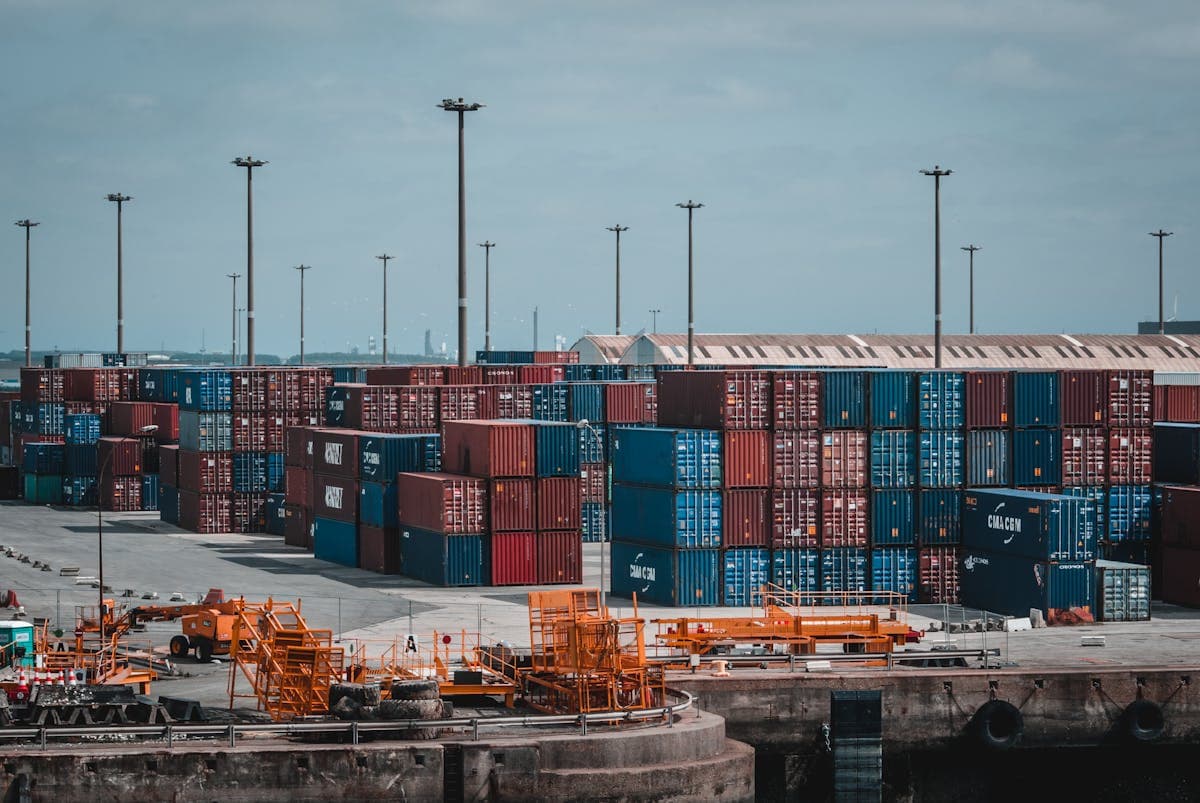
The U.S. government owes American businesses $166 billion, interest is accruing at $650 million every single month, and the agency responsible for cutting the checks just told a federal judge it doesn't have the software or staff to do it. Welcome to the messiest financial cleanup in modern American history.
How We Got Here
On February 20, 2026, the Supreme Court dropped a bombshell. In a 6 to 3 decision written by Chief Justice John Roberts, the Court ruled in Learning Resources, Inc. v. Trump that the International Emergency Economic Powers Act does not give the president the power to impose tariffs. Justices Sotomayor, Kagan, Gorsuch, Barrett, and Jackson joined the majority. The reasoning was straightforward: the power to levy taxes and duties belongs to Congress, full stop.
That single ruling wiped out the entire architecture of Trump's "Liberation Day" tariffs from 2025, which had slapped duties as high as 145% on Chinese goods and 10 to 50% on imports from dozens of other countries. Every dollar collected under that authority was, retroactively, illegal.
The Scale of the Problem
Here's where the numbers get staggering. Over the life of the IEEPA tariff regime, U.S. Customs and Border Protection collected roughly $166 billion from more than 330,000 importers across 53 million individual import entries. That money was already spent, folded into the federal budget and earmarked for infrastructure and social spending projections through 2027.
Now it all has to go back. And not just the principal. The Court of International Trade ordered on March 4 that refunds must include interest, which is accumulating at an estimated $650 million per month. Every day CBP delays, the bill grows.
CBP's 45-Day Scramble
When the CIT ordered CBP to halt collection and begin processing refunds, the agency's response was essentially: we can't. In a March 6 filing, Brandon Lord, CBP's executive director of Trade Policy and Programs, laid out the harsh reality. The agency's existing technology, processes, and manpower are "not well suited to a task of this scale."
Processing 53 million entries manually would require over 4 million hours of employee labor. So CBP proposed building an automated system instead, asking the court for 45 days to get it operational. That puts the target date around April 20, 2026. The system, called the Consolidated Administration and Processing of Entries (CAPE) portal, would allow importers to submit declarations through CBP's Automated Commercial Environment platform, which would then automatically recalculate duties owed without the IEEPA tariffs and process refunds.
The court granted the extension, but the clock is ticking.
The Corporate Windfall
For America's biggest importers, this is the financial equivalent of finding a winning lottery ticket in an old coat pocket. Companies like FedEx, Costco, Dyson, L'Oreal, and Nissan North America have already filed lawsuits seeking their money back, and they're far from alone: over 2,000 refund cases are now in the system.
Analysts at JPMorgan estimate the refund surge could boost annualized real GDP growth by more than 0.5 percentage points in the first half of 2026 alone. Companies that spent the past year in defensive mode, hoarding cash and delaying capital expenditure, are suddenly sitting on the promise of massive non-dilutive capital injections. The M&A pipeline is already heating up.
But here's the catch: nobody knows exactly when the checks will arrive. The CAPE portal hasn't been built yet, and even after it goes live, the process of verifying 53 million entries won't happen overnight. For smaller importers without armies of trade lawyers, navigating the system could take months.
The "Finally Liquidated" Headache
There's a thorny legal question lurking beneath the headline numbers. Under normal customs procedures, import entries are "liquidated" within a set timeframe, after which there's a 180-day window to file a protest. For entries where that window has already closed, the path to a refund is far murkier.
The CIT's March 4 order didn't clearly resolve whether these "finally liquidated" entries are covered. The government hasn't conceded that they are, either. For importers stuck in this gray zone, getting their money back may require additional lawsuits and potentially years of litigation. It's the kind of detail that doesn't make headlines but represents billions of dollars in real money.
Meanwhile, the Tariffs Are Back (Sort Of)
If you thought the Supreme Court ruling meant free trade had won, think again. Within hours of the decision, President Trump signed a new executive order imposing a 10% tariff on all imports under Section 122 of the Trade Act of 1974, effective February 24. By March 4, Treasury Secretary Bessent announced plans to raise that to 15%, the maximum allowed under the statute.
The problem? Section 122 has never been invoked by any president. It was designed for a very specific scenario: addressing "balance of payments" deficits in a fixed exchange rate system. The United States abandoned that system half a century ago when it left the gold standard. A coalition of 24 states, led by New York Attorney General Letitia James, filed suit in March challenging the new tariffs on exactly those grounds.
The Section 122 tariffs are set to expire on July 24, 2026, unless Congress votes to extend them. Given the political environment, that seems unlikely.
The Bigger Picture for the Economy
The whiplash of tariffs on, tariffs off, new tariffs on is doing real damage to business confidence. Companies can't plan capital spending when the rules of international trade change every few weeks. The administration simultaneously launching Section 301 investigations against 60 countries for forced labor practices and probing China, Mexico, and the EU for structural manufacturing surpluses suggests the trade war is far from over; it's just moving to different legal terrain.
Meanwhile, the federal government faces its own headache. That $166 billion was already baked into spending projections. Returning it creates a fiscal hole that has to be filled somehow, whether through spending cuts, new revenue, or more borrowing.
What to Watch
The April 20 deadline for CBP's CAPE portal is the first big milestone. If the system launches on time and works, refunds could start flowing within weeks. If it doesn't, expect the CIT to get more aggressive with enforcement orders.
Keep an eye on the Section 122 lawsuit as well. If the courts strike down those tariffs too, the administration will be running out of legal avenues to maintain its trade policy without going through Congress. And the Section 301 investigations, which have a longer legal runway, could become the next major battleground.
For now, 330,000 American businesses are waiting for their money, the government is scrambling to build the technology to return it, and interest keeps piling up at $650 million a month. The Supreme Court may have settled the constitutional question, but the practical fallout is just getting started.
References
- Plan emerges for $166 billion in tariff refunds - CNN Business
- CBP gets extension to process $166 billion in tariff refunds - The Hill
- Supreme Court Rules President Lacks IEEPA Authority to Impose Tariffs - BakerHostetler
- The remaining questions after the Supreme Court's tariffs ruling - SCOTUSblog
- CBP Outlines IEEPA Tariff Refund Process - Orrick
Get the Daily Briefing
AI, Crypto, Economy, and Politics. Four stories. Every morning.
No spam. Unsubscribe anytime.