Apple's $1 Billion Siri Upgrade Just Hit a Wall, and iOS 26.4 Shipped Without It
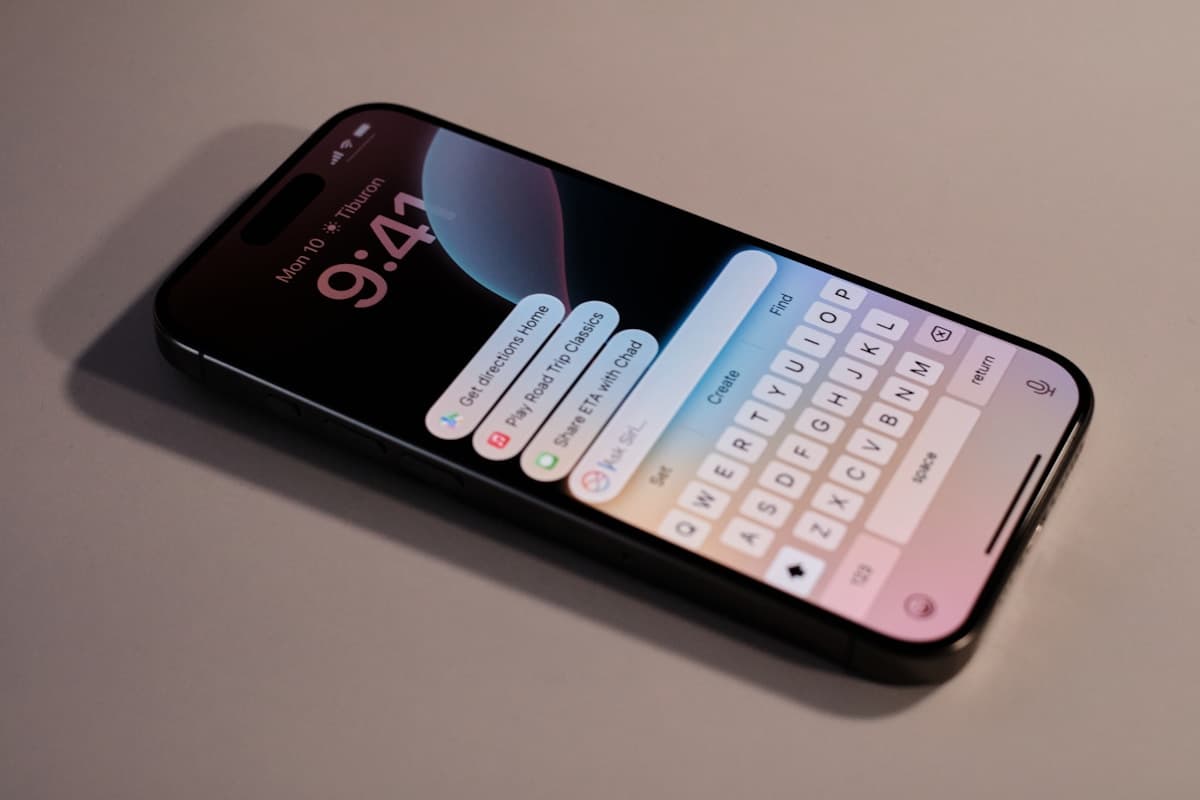
The Biggest AI Product Launch of 2026 Just Got Delayed
When Apple and Google announced their partnership on January 12, it felt like the most consequential AI deal of the year. Apple would pay roughly $1 billion annually to build its next generation of Apple Foundation Models on Google's Gemini technology. The revamped Siri, powered by Gemini under the hood, was supposed to be Apple's answer to ChatGPT, Google's own Gemini chatbot, and every other AI assistant that had made Siri look embarrassingly outdated.
The plan was clear: iOS 26.4 would deliver the first wave of the new Siri to developers in late February, with a public release in March or early April. Bloomberg's Mark Gurman reported that Apple was preparing a February demonstration. The hype was real.
Then Apple released iOS 26.4 Beta 1 on February 17. And Beta 2 on February 23. Neither contained a single new Siri feature.
What Went Wrong
According to multiple reports from MacRumors and 9to5Mac, Apple ran into unforeseen problems during internal testing. The issues are specific and telling: Siri sometimes doesn't properly process queries and takes too long to respond. Even worse, Siri occasionally falls back on using ChatGPT for information instead of the Gemini-powered technology that Apple specifically partnered with Google to use.
That last part is particularly awkward. Apple spent $1 billion a year to get Gemini, and their assistant can't reliably use it. Instead, it defaults to a competitor's product. From an engineering perspective, this suggests the integration between Apple's on-device processing pipeline and Google's cloud models isn't working smoothly. The handoff between what Siri processes locally (through Apple's Private Cloud Compute architecture) and what gets sent to Gemini for heavier processing is apparently where things break down.
Apple confirmed to CNBC that the new Siri is still coming in 2026, but the timeline has shifted significantly. Some features may arrive with iOS 26.5 in May. The full conversational upgrade, internally codenamed "Project Campos," is now expected to be the centerpiece of WWDC in June, with an actual public release alongside iOS 27 in September.
This Is a Pattern, Not a Surprise
The uncomfortable truth is that Apple has been delaying Siri improvements for nearly two years. The company first announced a more capable Siri at WWDC 2024 as a feature coming to iOS 18. That didn't happen. It was pushed to 2025. Then 2026. Each time, Apple promised the upgrade was almost ready.
The difference this time is that Apple put real money and a major partnership behind the effort. A billion-dollar annual deal with Google is not the kind of thing you announce without confidence that the product will ship. The fact that it's still not ready, after the partnership has been public for six weeks, suggests the technical challenges are more fundamental than Apple expected.
The core problem might be architectural. Apple's entire approach to AI revolves around privacy: processing as much as possible on-device, using Private Cloud Compute for heavier tasks, and minimizing what gets sent to third-party servers. Gemini, by contrast, is a cloud-native model designed to run on Google's infrastructure. Making these two philosophies work together seamlessly is genuinely difficult, and the testing problems suggest Apple hasn't solved it yet.
The Privacy Pipeline Problem
Apple's planned architecture involves a multi-step privacy process. When a user asks Siri something that requires Gemini's capabilities, the request first goes through Apple's Private Cloud Compute (PCC) infrastructure, which strips personal identifiers and masks user IP addresses before the sanitized request reaches Google's servers. Google is contractually barred from using Apple user data to train its models or build advertising profiles.
This sounds good on paper, but it introduces latency and complexity. Every query that needs Gemini has to go through Apple's privacy layer first, then to Google, then back through Apple before the response reaches the user. If any part of that chain is slow or unreliable, Siri's response times suffer. And when the chain fails entirely, Siri apparently defaults to ChatGPT, which Apple integrated earlier as a fallback for Apple Intelligence.
The result is a Rube Goldberg machine of AI routing: user asks Siri a question, Siri tries to process it on-device, can't handle it, routes it to PCC, PCC sanitizes it and sends it to Gemini, Gemini doesn't respond fast enough, and Siri falls back to ChatGPT. That's not a great user experience.
What the Competition Is Doing
While Apple struggles to integrate someone else's AI, its competitors are shipping. Google's own Gemini app has been available on iPhones for over a year. ChatGPT has become the default AI assistant for hundreds of millions of users. Samsung's Galaxy S26, which launched in January, has Google's AI deeply integrated at the system level.
The gap between what Siri can do today and what users expect from an AI assistant in 2026 is enormous. Siri still struggles with multi-step tasks, lacks persistent conversation memory, and can't handle the kind of open-ended questions that ChatGPT and Gemini handle routinely. Every month that the Gemini-powered upgrade is delayed, more users form habits around competing products.
There's also the ETHDenver angle: Vitalik Buterin's main stage presentation at ETHDenver this week focused on the intersection of AI and Ethereum, emphasizing how AI agents will increasingly interact with blockchain networks. The broader AI ecosystem is moving toward autonomous agents that can take actions, not just answer questions. Apple's Siri, even the upgraded version, is still fundamentally a question-and-answer tool. The gap between that vision and Apple's shipping product is growing wider.
What iOS 26.4 Beta 2 Actually Includes
The beta that shipped on February 23 isn't empty. It includes improvements to CarPlay, which now supports third-party AI assistants including ChatGPT, Gemini (as a standalone app), and Claude. There are also minor improvements to Apple Maps, the Weather app, and several developer APIs.
But the headline feature, the one that was supposed to justify the beta's existence, is missing entirely. For developers who installed the beta expecting to start building for the new Siri, there's nothing to work with. That means the app ecosystem that would normally have months to prepare for a major Siri upgrade now has significantly less time.
The $1 Billion Question
Apple's deal with Google is structured as a multi-year partnership, so the financial commitment continues regardless of delays. Google gets paid whether Apple ships the features on time or not. From Google's perspective, this is a remarkable deal: they get a billion dollars a year from their biggest competitor, and any delay makes Apple look worse while Google's own Gemini products continue to improve.
For Apple shareholders, the concern isn't the money. Apple generates that much revenue every few hours. The concern is strategic: if Apple can't deliver competitive AI features, it risks losing the device loyalty that powers its entire ecosystem. People don't switch from iPhone to Android because of a single feature, but persistent AI inferiority creates the conditions where switching feels more reasonable.
What to Watch
The next milestone is WWDC 2026 in June. Apple is expected to make the fully conversational Siri (Project Campos) the centerpiece of the event. If the demo is impressive enough, the February delay becomes a footnote. If the demo reveals the same issues that plagued iOS 26.4 testing, Apple has a much bigger problem.
In the meantime, iOS 26.5, expected in May, is the next opportunity for Apple to ship at least some of the promised Siri improvements. The question is whether they'll be substantial enough to change the narrative, or whether they'll be minor additions that further reinforce the perception that Apple is behind on AI.
Apple has the resources, the talent, and now the partnership to build a world-class AI assistant. What they don't have, apparently, is the ability to ship it on time. And in AI, timing is everything.
References
- Apple reportedly pushing back Gemini-powered Siri features beyond iOS 26.4 - 9to5Mac
- New Siri Runs Into Problems, Features Could Be Pushed to iOS 26.5 and iOS 27 - MacRumors
- iOS 26.4 Beta Launches Without Apple Intelligence Siri Features - MacRumors
- iOS 26.4 Faces Delays as Apple Struggles to Ship Gemini-Powered Siri - MacObserver
- Apple picks Google's Gemini to run AI-powered Siri coming this year - CNBC
Get the Daily Briefing
AI, Crypto, Economy, and Politics. Four stories. Every morning.
No spam. Unsubscribe anytime.