The Supreme Court Is About to Kill Mail-In Ballot Grace Periods
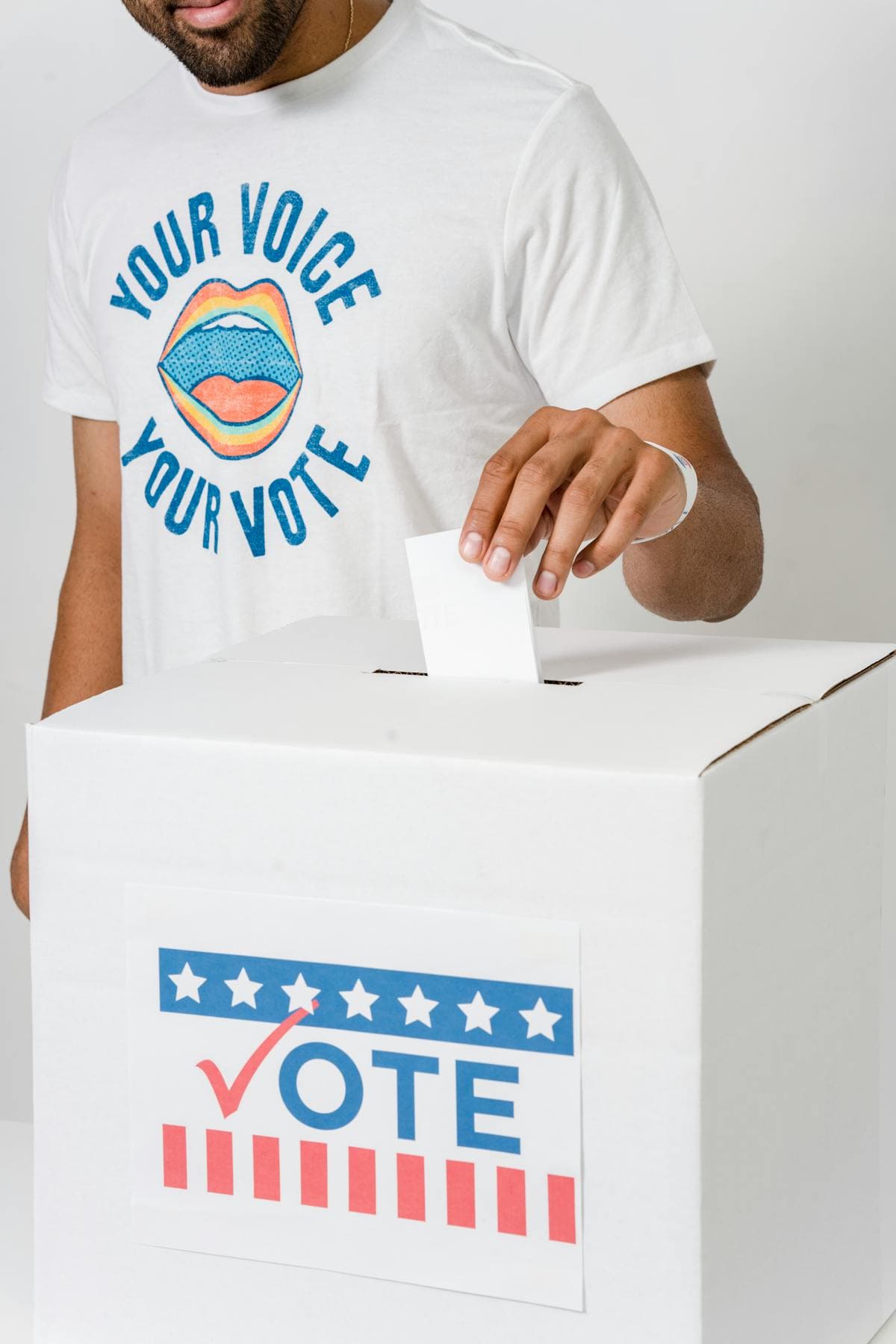
Here's a question that sounds simple but apparently isn't: if you drop your ballot in the mail on Election Day, should it count? For decades, 14 states and Washington, D.C., have said yes. But after oral arguments on March 23 in Watson v. Republican National Committee, the Supreme Court's conservative supermajority made it pretty clear they're ready to say no.
The ruling won't come until late June, but the writing is on the wall. And with the 2026 midterms just months away, this could reshape how millions of Americans vote.
What the Case Is Actually About
The lawsuit targets a Mississippi law that allows mail-in ballots to be counted as long as they're postmarked by Election Day and received within five business days afterward. The Republican National Committee brought the challenge back in 2024, arguing that federal law establishes Election Day as the hard deadline for everything: casting, receiving, and counting ballots.
Mississippi's Attorney General Lynn Fitch pushed back with a straightforward argument: "Counting votes is not part of the election." In other words, the act of tallying ballots that were already cast on time shouldn't be conflated with voting after the deadline.
The RNC's lawyer, Paul Clement, took the opposite view. "Finality should take place on Election Day," he told the justices, arguing that the word "election" in federal statute encompasses the entire process, from casting to counting.
How the Justices Tipped Their Hand
Over more than two hours of oral arguments, the conservative majority didn't leave much to the imagination. Justice Samuel Alito told Mississippi's lawyers that their position suffers from a "variety of line-drawing problems." Justice Brett Kavanaugh raised concerns that late-arriving ballots could erode public confidence in elections, especially when they determine the outcome of close races. He also pointed out that the practice expanded dramatically during the COVID-19 pandemic, suggesting it was never intended to be permanent.
The court's three liberal justices pushed hard in the other direction, emphasizing that states have broad constitutional authority to run their own elections and that federal law merely sets a date without dictating every procedural detail. But on a 6-3 court, those arguments are a rearguard action.
One telling moment came when Kavanaugh asked Clement a practical question: if the court rules for the challengers in June, would it be too late to implement the decision for the 2026 elections? The fact that he was already thinking about implementation timing tells you where his head is at.
The 14 States in the Crosshairs
This isn't just about Mississippi. Fourteen states and D.C. currently have laws that allow mail-in ballots to count if they arrive after Election Day, as long as they were postmarked on time. The list includes some of the biggest battleground states in the country, along with major population centers like California and New York.
If the court strikes down Mississippi's law on the grounds that it conflicts with federal statutes, every single one of those other laws becomes immediately vulnerable. State legislatures would scramble to rewrite their election codes before November, and election administrators who have run their systems this way for years would need to overhaul their processes on a compressed timeline.
The chaos potential here is significant. Many of these states adopted grace periods specifically because the U.S. Postal Service cannot guarantee delivery times, especially in rural areas. Eliminating the buffer doesn't just change a rule; it effectively disenfranchises voters whose ballots are in transit when the clock strikes midnight.
The Political Math
Let's be honest about the partisan dynamics. Republicans have been skeptical of mail-in voting since at least 2020, when the pandemic caused a massive surge in absentee balloting that disproportionately favored Democrats. Donald Trump spent years attacking mail-in voting as inherently fraudulent, and the RNC's legal strategy reflects that broader agenda.
The RNC's communications director for election integrity, Ally Triolo, framed it in terms of finality: "Watson v. RNC is about a simple principle: ballots must be received by Election Day. This prevents elections from dragging on for days and weeks after voters have cast their ballots."
Democrats see it differently. The DNC filed an amicus brief arguing that "Republicans' relentless assault on mail-in voting is not just un-American, but will harm our service members and their families who have risked it all for our democracy." That's not just rhetoric; military voters stationed overseas are among the most likely to have their ballots arrive after Election Day.
The irony is that as Republicans have increasingly embraced early and mail-in voting in recent cycles, the voter suppression angle has gotten murkier. But the structural effect is clear: tighter deadlines mean fewer ballots counted, and historically, those lost ballots come disproportionately from communities that lean Democratic.
The Midterm Wildcard
The timing makes this case unusually consequential. A ruling in late June gives states barely four months to adjust their systems before the November midterms. That's not a lot of time to rewrite election codes, reprogram ballot-processing systems, retrain poll workers, and communicate new deadlines to millions of voters.
Control of both the House and Senate is at stake in November. If the court eliminates grace periods, tight races in states like California, Washington, and Ohio could be decided by which ballots made it through the mail in time and which didn't. In a midterm election where every seat matters, throwing out even a small percentage of mail-in ballots could flip outcomes.
Election administrators have been raising alarms for months. The Postal Service's delivery standards have actually gotten worse in recent years, not better. In some rural areas, first-class mail can take five to seven days. Telling voters in those areas to mail their ballot by Election Day and then refusing to count it if the Postal Service takes too long is, critics argue, punishing voters for a failure that isn't theirs.
What Happens Next
The court will issue its opinion by late June or early July, right on schedule for maximum disruption. If the ruling is narrow, it might only apply to Mississippi's specific law. But based on how the oral arguments went, the more likely outcome is a broad ruling that defines "Election Day" as a hard receipt deadline for all federal elections.
That would trigger an immediate scramble in 14 states and D.C. Some state legislatures could try to pass new laws moving their mail-in ballot deadlines earlier, essentially telling voters to send their ballots sooner. Others might push for more in-person early voting options to compensate. And some states will inevitably end up in litigation over whether their specific laws are different enough from Mississippi's to survive.
Voting rights groups are already preparing for the worst. The ACLU, the Brennan Center, and Democracy Docket have all signaled they'll challenge any implementation they view as suppressive. But challenging a Supreme Court ruling is a fundamentally different fight than challenging a state law, and the legal options are limited.
The Bigger Picture
Watson v. RNC is part of a longer pattern. Over the past decade, the Supreme Court has systematically weakened voter protections, from gutting the Voting Rights Act in Shelby County v. Holder to green-lighting partisan gerrymandering in Rucho v. Common Cause. Each decision on its own seems narrow and technical. Taken together, they've reshaped the landscape of American democracy.
The mail-in ballot case fits neatly into that trajectory. It's framed as a question of statutory interpretation, not a big constitutional showdown. But the practical effect could be enormous: millions of voters in 14 states and D.C. will need to change how and when they vote, or risk having their ballots thrown out.
Watch for the ruling in June. And if you live in a state with a mail-in ballot grace period, start planning to either mail your ballot early or vote in person. Because the Supreme Court is about to rewrite the rules, and the clock is already ticking.
References
- Justices seem ready to overturn state law allowing for late-arriving mail-in ballots - SCOTUSblog
- Takeaways from arguments in the Supreme Court case that could end grace periods for mail-in ballots - CNN
- Supreme Court conservatives appear skeptical of mail-in ballots that arrive after Election Day - NBC News
- Supreme Court appears skeptical of laws counting mail-in ballots after Election Day - NPR
- DNC Statement Following SCOTUS Oral Arguments in RNC Case to Undermine Mail-In Voting - Democrats
Get the Daily Briefing
AI, Crypto, Economy, and Politics. Four stories. Every morning.
No spam. Unsubscribe anytime.