Germany's Super Election Year Begins: Baden-Württemberg Votes as Merz Faces His First Real Test
The Stakes in Stuttgart
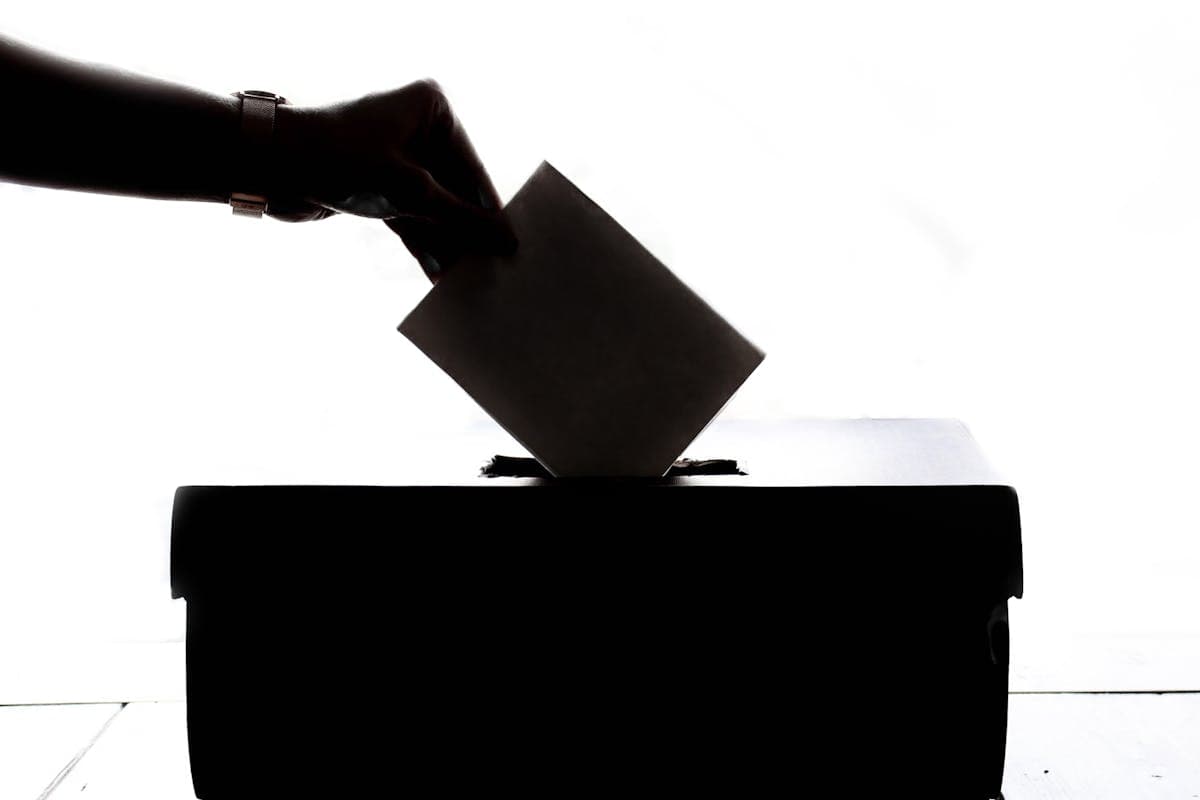
Around 7.7 million voters in Baden-Württemberg headed to the polls today, and the significance extends far beyond this single state. This election is the opening act of Germany's "Superwahljahr," a super election year featuring five state elections between March and September that will collectively determine how much governing room Chancellor Friedrich Merz actually has.
Merz himself attended the CDU's final campaign rally and framed the election in blunt terms: "Is the CDU still able to win elections, even when in government at such a turbulent time?" That's not just a rhetorical question. The answer will shape European politics for months to come.
Why Baden-Württemberg Matters More Than Most States
Baden-Württemberg is not a typical German state, and treating it as just another regional vote misses the point entirely. With nearly 11 million inhabitants, it's Germany's third-largest state by population and one of its most economically significant. This is the home of Mercedes-Benz, Porsche, Bosch, Trumpf, and SAP. It was long the benchmark for what industrial policy can achieve when it works.
The state has also been a political outlier. Since 2011, it's been led by the Greens under Minister-President Winfried Kretschmann, making it the only German state with a Green head of government. A CDU victory here would end that era and flip a symbolic stronghold.
For Merz, a win in Baden-Württemberg would provide critical leverage. A string of CDU gains across the super election year would strengthen his hand in the Bundesrat, Germany's upper chamber of parliament, giving him the legislative room to push through reforms that require cross-chamber support. A string of losses would constrain his government at precisely the moment it needs to deliver.
The Race: CDU vs. Greens in a Dead Heat
The final polls before election day showed a remarkably tight race. The CDU led with about 27-28% of the vote, with the Greens close behind at 22-24%. This is a dead heat by German standards, where small swings in turnout or last-minute decisions can reshape the outcome.
The CDU put forward Manuel Hagel, a 37-year-old state and parliamentary group leader, as their candidate. Youth and energy are part of his pitch, positioning himself as a fresh face for a party that needs to prove it can attract younger voters.
The Greens countered with Cem Ozdemir, 60, a nationally recognized figure who served as agriculture minister under former Chancellor Olaf Scholz. Ozdemir is one of the most prominent Turkish-German politicians in the country, and his candidacy carries both symbolic weight and practical advantages in a diverse, urbanized state.
The AfD Factor
The real wildcard is the Alternative for Germany (AfD). Polls put the far-right party at 18-20% in Baden-Württemberg, nearly double their result in the last state election. While that's still below the AfD's national polling average of around 25%, it would mark the party's best-ever result in a western German state.
This matters for coalition math. A strong AfD showing makes it harder to form governing coalitions without either very broad alliances or uncomfortable compromises. All other parties have maintained their refusal to govern with the AfD, but if the party consistently takes 20% or more, the remaining parties must cobble together coalitions from a shrinking pool.
The AfD's growth in western Germany is also significant because it challenges the narrative that the party's support is primarily an eastern German phenomenon. If the AfD can break 20% in a wealthy, industrial, western state like Baden-Württemberg, it suggests the party's appeal has become genuinely national.
The Bundesrat Connection
German state elections aren't just about who governs at the state level. Each state government gets representation in the Bundesrat, and much of Germany's legislation requires Bundesrat approval. This means the composition of state governments directly affects what Chancellor Merz can accomplish at the federal level.
Five state elections in one year give voters multiple chances to either endorse or punish the federal government. If Merz's CDU does well across the board, he gains Bundesrat seats and legislative momentum. If voters use state elections to express frustration with federal policies, Merz could find himself unable to pass key reforms even with a parliamentary majority in the Bundestag.
The timing is particularly sensitive. Germany faces significant challenges: the fallout from US tariffs on European exports, the ongoing need to boost defense spending, the energy transition, and the question of how to handle migration. All of these require legislative action, and much of that action needs Bundesrat support.
The European Dimension
This election doesn't exist in a vacuum. EU-China tensions are escalating as Europe confronts Chinese overcapacity in electric vehicles, wind components, solar panels, and semiconductors. The US under Trump has pushed a more interventionist trade stance that has unsettled European markets. Canadian Prime Minister Mark Carney declared at Davos 2026 that the world is "in the midst of a rupture, not a transition."
Germany sits at the center of all these tensions. As Europe's largest economy and its industrial anchor, how Germany governs matters for the entire continent. A strong, stable Merz government can lead European responses to these challenges. A weakened Merz, bogged down by state election losses and Bundesrat gridlock, would leave Europe's response more fragmented.
Baden-Württemberg's industrial base makes it especially relevant. The state's automakers and manufacturers are directly affected by both US tariffs and Chinese competition. How voters in Stuttgart, Mannheim, and Karlsruhe respond to these economic pressures will signal how German industrial regions broadly feel about the direction of federal policy.
What to Watch
Provisional results are expected around 22:00 local time tonight. The key numbers to watch: Can the CDU finish clearly ahead of the Greens, or will it be close enough to complicate coalition talks? Does the AfD break 20%, and if so, how does that reshape the coalition math? And what happens to the smaller parties, particularly the SPD and FDP, who risk falling below the 5% threshold needed for parliamentary representation?
Beyond tonight, the next election in Germany's super year is Rhineland-Palatinate on March 22, just two weeks away. If the same trends hold, the pattern from Baden-Württemberg will become a narrative. Five elections in one year means five opportunities for the political landscape to shift, and tonight's results set the tone for everything that follows.
References
- German state election a test for Chancellor Merz - France 24
- The 2026 State Elections in Baden-Württemberg: First Test For Merz's Federal Government - IFRI
- Germany's 'super election year': 5 elections determining reform efforts - ING
- Baden-Württemberg Election 2026: CDU and Greens in Dead Heat - Newsworm
- Willkommen to Germany's 'super election year' - Atlantic Council
Get the Daily Briefing
AI, Crypto, Economy, and Politics. Four stories. Every morning.
No spam. Unsubscribe anytime.