The TACO Trade: $1.7 Trillion Moved in 56 Minutes on a Truth Social Post
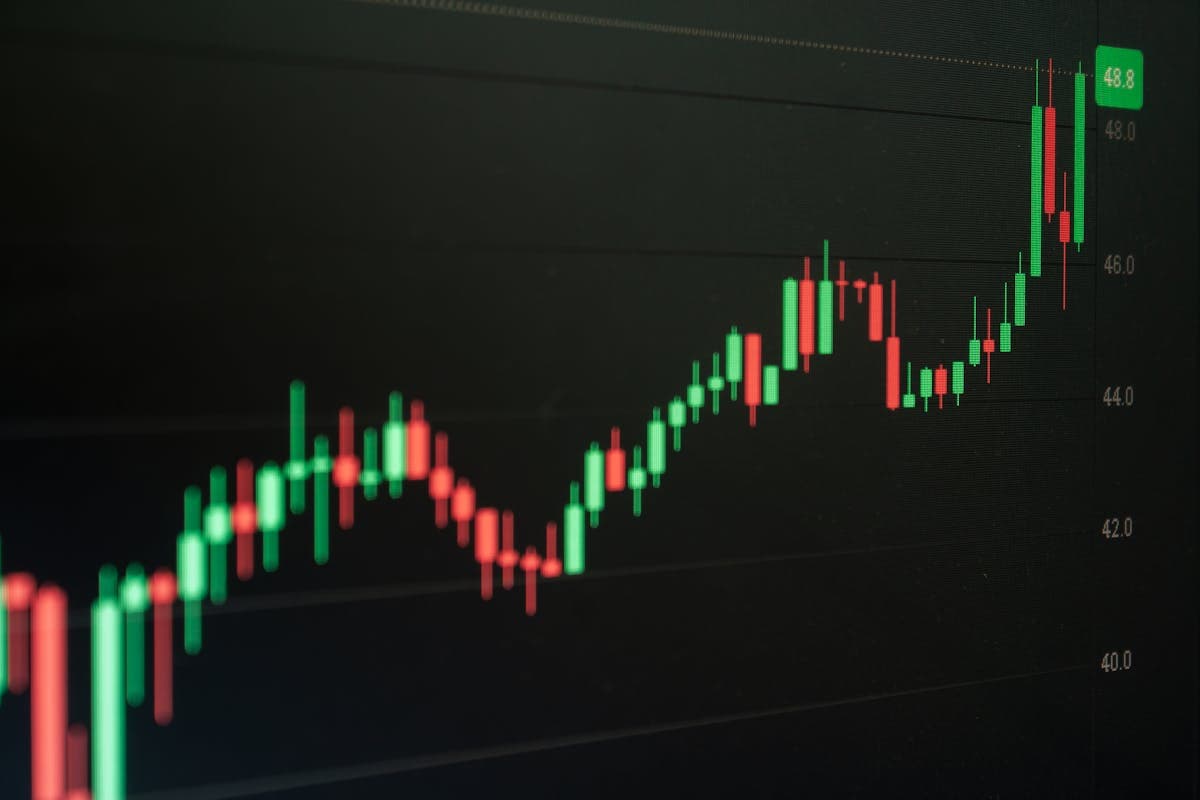
At exactly 7:04 AM Eastern on Monday, a single Truth Social post did something that usually takes an earnings season, a central bank pivot, or a full-blown financial crisis to accomplish: it moved roughly $3 trillion in S&P 500 market capitalization in under an hour. By 7:10 AM, stocks had surged, adding about $2 trillion. By 7:31 AM, Iran called the whole thing a lie, and $1 trillion evaporated. Welcome to the era of the TACO trade, where the most powerful force in global markets isn't the Fed, the ECB, or corporate earnings. It's a social media post timed to land right before the opening bell.
What Happened at 7:04 AM
President Trump posted on Truth Social that the U.S. and Iran had held "very good and productive conversations" over the weekend, aimed at "a complete and total resolution" of hostilities in the Middle East. He said he'd ordered the Pentagon to pause all strikes on Iranian power plants and energy infrastructure for five days to let talks continue. This came less than 48 hours after Trump had threatened to "obliterate" Iran's power grid if Tehran didn't reopen the Strait of Hormuz.
The reaction was violent. S&P 500 futures, which had been trading sharply lower heading into the session, rocketed upward by about 240 points. The Dow swung more than 1,000 points from its pre-market lows. Brent crude collapsed from $109 to $92. In the time it took most traders to walk from the parking lot to their desks, $1.7 trillion had been added to U.S. stock market capitalization and oil had dropped $17, roughly 15%.
Then Iran Said: "What Talks?"
Twenty-seven minutes later, the story started falling apart. Iranian Foreign Ministry spokesperson Esmaeil Baghaei issued a flat denial: "There is no dialogue between Tehran and Washington." Iran's parliament speaker Mohammad Bagher Qalibaf went further, posting on X that "fakenews is used to manipulate the financial and oil markets." An unnamed senior security official told Fars News Agency there had been "no direct contact with Trump, not even through intermediaries."
By 8:00 AM, roughly $1 trillion of the initial gains had already vanished. The S&P 500 gave back 120 points from its post-announcement peak. Markets still ended the day solidly higher, with the Dow closing up 631 points (1.38%) at 46,208 and the S&P 500 gaining 1.15% to 6,581, but the whiplash told a bigger story than the closing numbers.
Meet the TACO Trade
Wall Street now has an acronym for this: TACO, which stands for "Trump Always Chickens Out." The term was coined by Financial Times columnist Robert Armstrong back in May 2025, originally to describe Trump's pattern with tariffs. The playbook was simple: announce something catastrophic, watch markets plunge, then reverse course before real economic damage sets in. Markets would rally on the reversal, and the net effect was controlled chaos.
The tariff version of TACO became so reliable that traders started front-running it. When Trump announced massive tariffs, experienced market participants wouldn't panic sell. They'd wait, sometimes just days, for the inevitable rollback, and buy the dip. The pattern made money consistently enough that it effectively became a trading strategy.
Now the same pattern has migrated from trade policy to wartime geopolitics, and the stakes are significantly higher. When you TACO on a 25% tariff on Canadian lumber, the economic damage of being wrong is manageable. When you TACO on a military conflict involving the world's most critical oil chokepoint, the margin for error shrinks dramatically.
The Timing Problem
Here's what has analysts and observers increasingly uncomfortable: these announcements keep landing at suspiciously convenient moments. Monday's post arrived at 7:04 AM, roughly two and a half hours before the stock market opened but right when futures trading was active and liquid enough to capture a massive move.
Iranian academic Seyed Mohammad Marandi, who has connections to Iran's government, noted a pattern: "Every week, when markets open, Trump makes these kinds of statements to drive down oil prices. Even his five-day deadline aligns with the closure of the energy market." The Kobeissi Letter, a widely followed market analysis newsletter, flagged the "suspicious timing and dramatic market reversals" as evidence of what it called potential market manipulation designed to address skyrocketing energy costs.
To be clear, there's no evidence of illegal insider trading, and presidents have broad authority to make public statements about foreign policy. But the pattern raises legitimate questions about whether foreign policy announcements are being calibrated, at least in part, for their market impact.
What the Numbers Actually Show
Strip away the drama and look at where markets actually closed on Monday. The Dow finished up 631 points, about 60% below its intraday peak of over 1,000 points. The S&P 500 gained 1.15%. Brent crude settled at $99.94, down 10.9% but well above the $92 intraday low. WTI ended at $88.13, down 10.3%. The 10-year Treasury yield dipped to 4.35% from 4.39%, still well above the pre-war level of 3.97%.
Sector performance was telling. Airlines and cruise lines led the rally, with Norwegian Cruise Line up 6.2%, United Airlines up 4.5%, and American Airlines up 3.6%. These are the companies with the most direct exposure to fuel costs, confirming that the market read this as fundamentally an energy story. The small-cap Russell 2000, which is more sensitive to domestic economic conditions, rose 2.3%, suggesting real optimism about reduced recession risk.
But the bond market was more cautious. That 4.35% yield on the 10-year tells you fixed income investors aren't buying the "peace is at hand" narrative as enthusiastically as equity traders. The gap between the 10-year yield now and its pre-war level of 3.97% represents a persistent geopolitical risk premium that one Truth Social post hasn't erased.
The Credibility Deficit
The fundamental problem with the TACO trade is that it works until it doesn't, and each cycle erodes the credibility that makes it function. Markets rallied Monday because traders assumed the pattern would hold: Trump escalates, markets panic, Trump reverses, markets rally. But the gap between announcement and reality is widening.
Iran didn't just deny the talks. Officials suggested the announcement itself was designed to manipulate energy markets. Whether that's accurate or just diplomatic posturing, the fact that a sovereign nation is publicly accusing a U.S. president of market manipulation via wartime announcements is extraordinary. It creates a credibility problem that compounds with every cycle.
The Strait of Hormuz still isn't open. Oil is still at $88 to $100, roughly double where it was before the conflict started. And the five-day pause on strikes doesn't resolve any of the underlying issues that led to the war in the first place. All of which means the next TACO announcement will carry less conviction, the rally will be smaller, and the reversal will come faster.
What to Watch
The five-day countdown is the immediate marker. Trump's pause on strikes expires late this week, and markets will be watching whether the "productive conversations" produce anything tangible. If Friday comes and there's no visible progress, expect another round of oil spikes and equity selloffs, likely sharper than what we saw last week because the disappointment will compound the credibility problem.
Beyond that, watch for three things. First, whether any congressional voices start pressing the SEC or CFTC on the pattern of pre-market geopolitical announcements. Second, whether institutional investors start pricing TACO exhaustion into their models, which would show up as wider options spreads and elevated VIX levels even on "good news" days. Third, and most importantly, whether the Strait of Hormuz actually reopens. Because underneath all the market theatrics and acronym-driven trading strategies, there's still a real war, real disrupted oil flows, and a real risk that the next TACO doesn't come with a reversal.
References
- Trump has TACO'd again, sparking a $1.7 trillion stock market rally in minutes - Fortune
- Was Trump's Big Iran Announcement Just a Ploy at Market Manipulation? - The New Republic
- Analysis: Trump's suspiciously market-timed announcements on Iran - CNN
- Oil drops, stocks soar after Trump postpones strikes on Iran - CNN Business
- Stocks rally and oil sinks after Trump hints at end to war, as Iran denies talks - BNN Bloomberg
Get the Daily Briefing
AI, Crypto, Economy, and Politics. Four stories. Every morning.
No spam. Unsubscribe anytime.