Oil Crosses $100, Stocks Hit 2026 Lows, and the Fed Is Trapped
The Number That Changed Everything
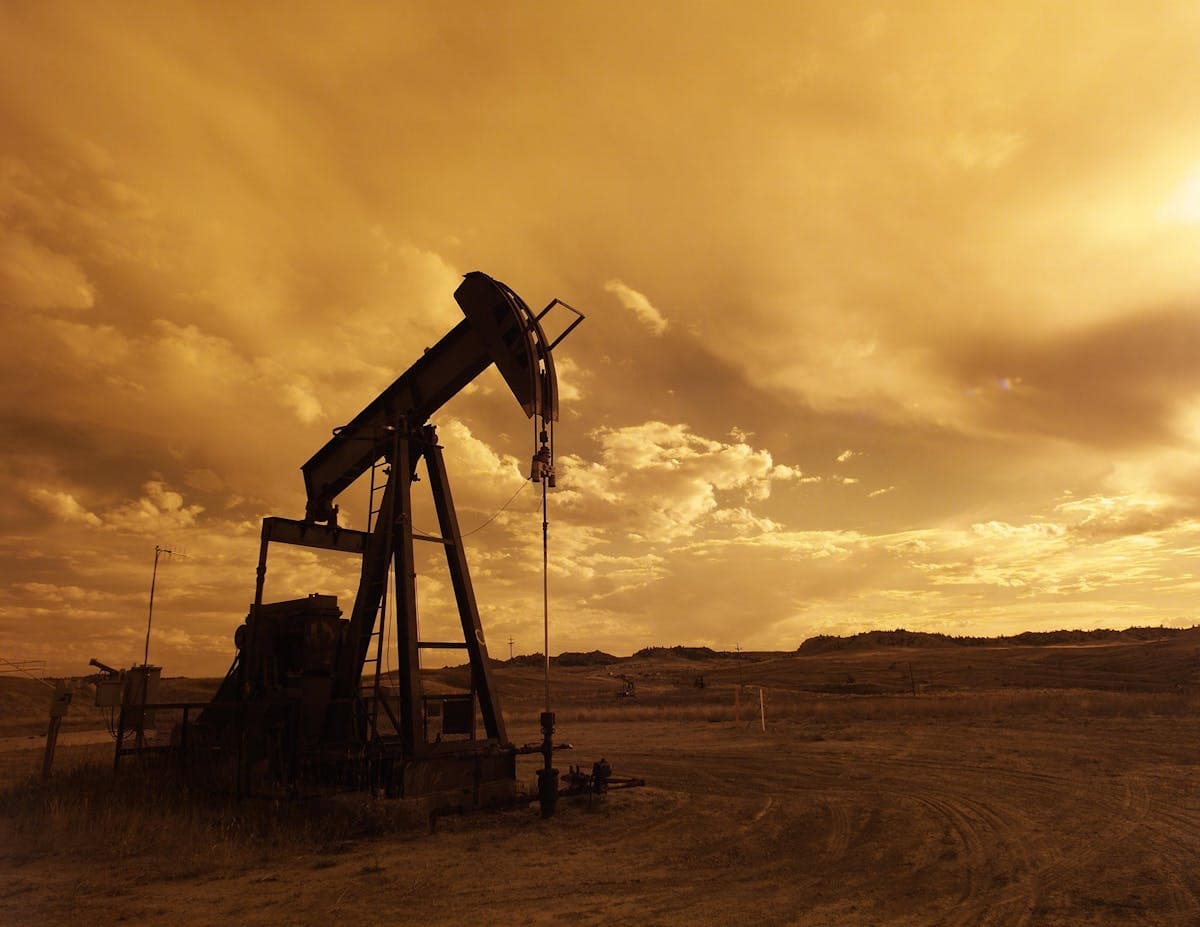
Brent crude closed at $100.46 a barrel on March 12, up $8.48 in a single session. That's a 9.22% move in one day. For context, oil hasn't traded above $100 since August 2022, back when the world was still dealing with the fallout from Russia's invasion of Ukraine. Now the catalyst is different, but the pain is disturbingly familiar: the Strait of Hormuz, the chokepoint that handles roughly one-fifth of the world's oil supply, is in crisis, and the market just priced in the possibility that it stays that way.
Oil had already spiked near $120 a barrel in early March before briefly pulling back. The fact that it immediately reclaimed $100 on this latest leg up tells you something important: the market doesn't believe the worst is over. Iran's IRGC has warned that prices could hit $200 if the strait remains closed. That might sound like posturing, but traders aren't willing to bet against it.
Wall Street's Worst Day of 2026
The oil spike sent shockwaves through equities. The Dow Jones dropped 739 points to close at 46,677.85, a loss of 1.56%. The S&P 500 fell 1.52% to 6,672.62. The Nasdaq took the hardest hit, dropping 1.78% to 22,311.98. All three indexes closed at their lowest levels of 2026, and the selling was broad: over 72.8% of issues on the New York Stock Exchange declined.
The S&P 500 is now hovering dangerously close to its 200-day moving average at 6,582. Technicians watch that level obsessively because breaks below it have historically preceded deeper selloffs. We're only about 90 points away. If the oil situation doesn't stabilize, that level is going to get tested very quickly.
Ed Yardeni, one of Wall Street's most respected strategists, put the probability of a stagflation-driven market meltdown at 35% and projected a 10 to 15% equity correction if it materializes. That's not a fringe call anymore. That's a mainstream risk assessment.
The Stagflation Trap, Explained
Here's why this oil shock is so dangerous. Normally, when the economy weakens, the Fed cuts rates to stimulate growth. And normally, when inflation spikes, the Fed raises rates to cool things down. Stagflation is what happens when both problems hit at the same time, leaving the central bank with no good move.
Look at the numbers. Q4 2025 GDP came in at just 1.4% annualized, which is already weak. February payrolls were a disaster: the economy lost 92,000 jobs against expectations of a 70,000 gain. Unemployment has risen to 4.4%. By every measure, the economy needs help.
But core PCE inflation is sitting at 3.0%, a full percentage point above the Fed's target. Oil at $100 is going to push that number higher, not lower. Add in the blanket 10% tariff on all trading partners that's already in effect, and you've got inflationary pressure coming from multiple directions simultaneously. The Fed can't cut rates without risking an inflation spiral. It can't hold rates without watching the economy deteriorate. That's the trap.
History's Warning
This isn't the first time an oil shock has collided with an already vulnerable economy. The three previous oil-shock bear markets, in 1973, 1979, and 1990, averaged roughly 13 months in duration and about a 30% decline from peak to trough. Those are sobering numbers if you're thinking about what could happen from here.
KPMG chief economist Diane Swonk added a particularly grim dimension this week, warning that the Hormuz conflict could drag on for six months or longer and send oil above $130 a barrel. If that scenario plays out, the historical parallels to the 1970s energy crises become uncomfortably precise. Back then, the combination of supply shocks and policy paralysis produced a lost decade for both stocks and economic growth.
The IEA has already released 400 million barrels from strategic petroleum reserves, which bought some time but clearly hasn't been enough to keep prices below $100. Strategic reserves are a finite tool; they can smooth out short-term disruptions but they can't substitute for reopening the world's most important oil chokepoint.
The Fed's Policy Nightmare
The 10-year Treasury yield at 4.19% tells you exactly how the bond market views this situation. Yields aren't collapsing the way they would in a normal economic slowdown because inflation expectations are anchored too high. The bond market is pricing in an extended period of elevated prices regardless of what happens to growth.
Rate cut expectations have been pushed back dramatically. A few weeks ago, markets were pricing in a June cut. Now the consensus has shifted to September at the earliest, and even that depends on oil prices stabilizing and the labor market deteriorating further. The Fed is essentially frozen, watching the economy weaken while being unable to do anything about it.
This is the fundamental difference between an oil shock and a financial crisis. In a financial crisis, the playbook is clear: flood the system with liquidity. In a supply-driven inflation shock, more liquidity makes the problem worse. The Fed's tools are designed for demand management, not supply disruptions.
The Tariff Multiplier
What makes 2026 different from previous oil shocks is the additional drag from trade policy. The blanket 10% tariff on all trading partners is acting as a cost multiplier across the entire economy. Every good that crosses a border costs more, and that was true before oil hit $100.
Think about it this way: a manufacturer importing components from Asia is now paying more for those parts because of tariffs, more for the fuel to ship them because of oil prices, and more for the energy to run the factory because natural gas and electricity prices follow crude. Each layer of cost gets passed through to the consumer, creating an inflationary feedback loop that the Fed's interest rate tools simply cannot address.
The combination of supply-shock inflation and tariff-driven inflation is particularly toxic because neither source of price pressure responds to monetary policy. You can't drill more oil by raising rates, and you can't remove tariffs by tightening financial conditions.
What to Watch
The next few weeks will determine whether this is a temporary spike or the beginning of something much worse. The key variable is the Strait of Hormuz itself. If there's a credible diplomatic path to reopening it, oil prices will retreat quickly and the equity damage will be contained. If the situation escalates further, the $130 scenario Swonk described becomes very real, and the historical bear market comparisons start to apply.
Watch the S&P 500's 200-day moving average at 6,582. A sustained break below that level would likely trigger algorithmic selling and margin calls that could accelerate the decline. Watch the March jobs report for confirmation of whether February's 92,000-job loss was an anomaly or a trend. And watch the Fed's next statement for any hint that policymakers are prioritizing growth over inflation, because that signal would tell you they've decided which side of the stagflation trap they'd rather fall into.
The bond market is the single best real-time indicator right now. If the 10-year yield starts rising sharply above 4.5% while stocks continue falling, that's the stagflation scenario playing out in real time. If yields drop toward 3.8% while stocks fall, that's a growth scare, and the Fed will eventually have room to cut. Right now, yields are stuck in the middle, which means the market hasn't made up its mind. Neither has the Fed.
References
- Oil price went over $100 after U.S. admitted it cannot control the Strait of Hormuz - Fortune
- Fears of 1970s-style stagflation arise with oil spike to $100 - CNBC
- Oil Shock Leaves Federal Reserve Facing Policy Trap - StoneX
- S&P 500 Correction Warning Grows as Oil Shock, Fed Fears Split Wall Street - TS2
- Oil Shock Could Revive 1970s-Style Stagflation, Ed Yardeni Warns - Benzinga
Get the Daily Briefing
AI, Crypto, Economy, and Politics. Four stories. Every morning.
No spam. Unsubscribe anytime.