Wall Street Is About to Find Out If the $65.7 Billion Nvidia Bet Still Works
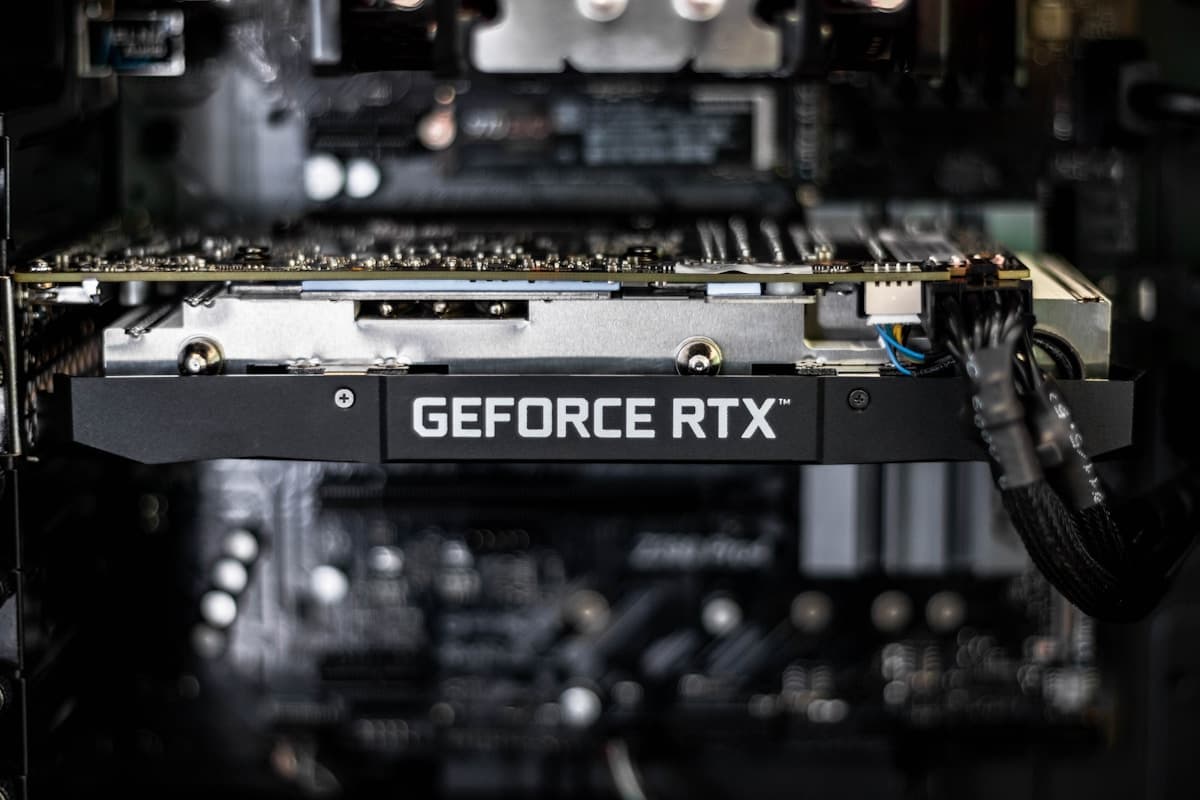
The Most Important Earnings Report of 2026
After the closing bell today, Nvidia will report its fiscal 2026 fourth-quarter results, and the entire market is waiting. Analysts expect $65.7 billion in revenue, a 67% increase year over year, and earnings per share of $1.53, up nearly 72%. The prediction market Polymarket shows 95% of bettors expect Nvidia to beat estimates.
Those numbers would be extraordinary for any company. For Nvidia, they're baseline expectations. The stock has been one of the market's few bright spots in 2026, outperforming the broader indices even as tariff chaos, AI disruption fears, and Fed uncertainty have battered everything else. What happens after 4:20 p.m. Eastern today will set the tone for tech stocks and possibly the entire market through March.
The conference call at 5 p.m. will matter as much as the numbers. Investors want to hear about Blackwell demand, margin guidance for fiscal 2027, and whether CEO Jensen Huang has visibility into AI capital spending beyond the current cycle.
Turnaround Tuesday: The Bounce That Wasn't Convincing
Markets staged a recovery on February 24 after Monday's brutal sell-off. The S&P 500 rose 0.77% to close at 6,890. The Dow climbed 370 points to 49,174. The Nasdaq gained about 1%, led by a rebound in software stocks that had been crushed by Anthropic's COBOL announcement the day before. Salesforce jumped more than 4% and ServiceNow added over 2% as the "AI scare trade" from Monday partially reversed.
But calling it a relief rally overstates the conviction. Volume was below average. The gains were concentrated in the stocks that had been hit hardest on Monday, which is typical of dead-cat bounces and short covering rather than genuine buying. The S&P 500 found support around 6,800, a level that technical analysts consider critical. If it breaks below on another bad day, the next support zone is around 6,600, which would put the index firmly in correction territory for 2026.
The market's willingness to bounce at all shows that investors haven't capitulated. But the bounce was fragile, and everyone knows it. Today's Nvidia report is the next catalyst that will determine whether the S&P holds its ground or gives back Tuesday's gains and then some.
Consumer Confidence: The Mixed Signal
The Conference Board's consumer confidence index ticked up 2.2 points in February to 91.2, slightly better than economists expected. On the surface, that's good news: consumers feel a bit better about the economy than they did in January.
Dig deeper and the picture is murkier. The index remains well below its November 2024 peak, and the components tell a split story. Consumers' expectations about the future improved, but their assessment of current conditions deteriorated. People think things might get better, but they don't think things are good right now.
The labor market is the key driver. The "low hire, low fire" dynamic that's defined the jobs market for months is still in place. Companies aren't laying people off in large numbers, but they're not hiring aggressively either. That's good enough to prevent a recession but not good enough to make consumers feel confident about spending.
For the Fed, this is another data point that doesn't resolve the debate. Consumer confidence isn't collapsing (which would argue for rate cuts) but it isn't surging either (which would argue for holding rates steady). After Governor Waller's "coin flip" comments on Sunday, the March FOMC decision is essentially decided: 96.1% probability of a hold. The real question is whether the data between now and June opens the door for a summer cut.
Three Things to Watch in Nvidia's Report
Blackwell revenue and trajectory. Nvidia's Blackwell architecture is the company's next-generation AI chip platform. Revenue from Blackwell was around $7.1 billion last quarter, and analysts expect it to ramp to approximately $93.7 billion for the full fiscal year 2027. The Q4 number and the Q1 guidance will reveal whether that ramp is on track. Jensen Huang has described demand as "off the charts" with cloud providers "sold out," but the market needs hard numbers, not adjectives.
Margins. Nvidia guided toward gross margins in the mid-70s by the end of fiscal 2026. Whether they hit that target matters because margins determine how much of Nvidia's revenue growth actually drops to the bottom line. If margins came in below guidance, it could signal pricing pressure from competition (AMD's MI400, custom chips from Google and Amazon) or supply chain costs eating into profitability.
China. Nvidia has been assuming zero revenue from China in its guidance due to export restrictions. Any signal that this might change, or that Nvidia has found compliant ways to sell modified chips into China, would be a significant upside catalyst. Conversely, if management sounds more pessimistic about ever re-entering the Chinese market, it caps the long-term growth story.
The Tariff Backdrop
All of this is happening against the ongoing 15% Section 122 tariff that took effect yesterday. The tariff covers approximately $1.2 trillion in annual imports and has a built-in 150-day expiration around July 24. Legal challenges are expected within days, with trade experts arguing the tariff is legally vulnerable for the same statutory overreach reasons that took down the IEEPA tariffs.
For Nvidia specifically, the tariff dynamics are complex. Nvidia's chips are manufactured by TSMC in Taiwan, so imports of finished chips into the U.S. are subject to the 15% levy. However, Nvidia's highest-value sales are to hyperscale cloud providers who largely operate data centers both domestically and internationally, which creates some flexibility in how the tariff burden gets distributed.
The bigger concern is the macro effect: if the tariff slows economic growth, it could eventually slow AI capital spending. Tech companies have been remarkably resistant to cutting AI budgets so far, but a sustained economic downturn would eventually force even the biggest spenders to prioritize.
The PCE Preview
Later this week, the Bureau of Economic Analysis will release the Personal Consumption Expenditures (PCE) price index for January, the Fed's preferred inflation measure. This is the last major inflation data point before the March FOMC meeting.
The Q4 GDP revision came in at 1.4%, showing an economy that's growing but not robustly. If the PCE reading shows inflation cooling, it strengthens the case for a rate cut later in 2026. If inflation is sticky, it validates Waller's "higher for longer" stance and pushes rate cut expectations further into the future.
The combination of tariff uncertainty, mixed consumer confidence, and the upcoming PCE report means the economic picture is as murky as it's been all year. Nvidia's earnings won't change the macroeconomic fundamentals, but they will determine whether the technology sector, which accounts for roughly 30% of the S&P 500's market cap, has enough momentum to carry the broader market through this patch of uncertainty.
What Happens After the Bell
If Nvidia beats estimates and guides higher, expect a relief rally in tech stocks that could lift the S&P 500 back toward its January highs. The AI trade would get a fresh injection of confidence, and the "AI scare" narrative from Monday would fade into background noise.
If Nvidia misses or guides lower, the sell-off could be severe. Nvidia's weighting in major indices means a significant drop in NVDA would mechanically drag the S&P 500 and Nasdaq lower. More importantly, a disappointing report would validate the bears who argue that AI spending is peaking, which would hit every AI-adjacent stock from cloud providers to semiconductor equipment makers.
The most likely outcome, based on Polymarket's 95% beat probability, is that Nvidia delivers and the after-hours reaction is positive. But the guidance is what matters most. Wall Street already knows Q4 was strong. What it needs to hear is that Q1 and the rest of fiscal 2027 will be even stronger. Anything less, and the "coin flip" on the AI trade gets a lot more uncertain.
References
- Nvidia Earnings: Live Updates and Commentary February 2026 - Kiplinger
- Feb. 25 Will Be a Huge Day for Nvidia. 3 Important Things to Watch - Motley Fool
- Stock market today: Dow, S&P 500, Nasdaq jump as software leads AI relief rally - Yahoo Finance
- Prediction Markets Are 95% Sure Nvidia Will Beat Earnings - Motley Fool
- Markets Find Their Footing: S&P 500 Stabilizes at 6,800 Support - MarketMinute
Get the Daily Briefing
AI, Crypto, Economy, and Politics. Four stories. Every morning.
No spam. Unsubscribe anytime.