The Fed Called a Rate Cut a 'Coin Flip,' the Dow Dropped 822 Points, and the 15% Tariff Is Now Live
Three Hits in One Day
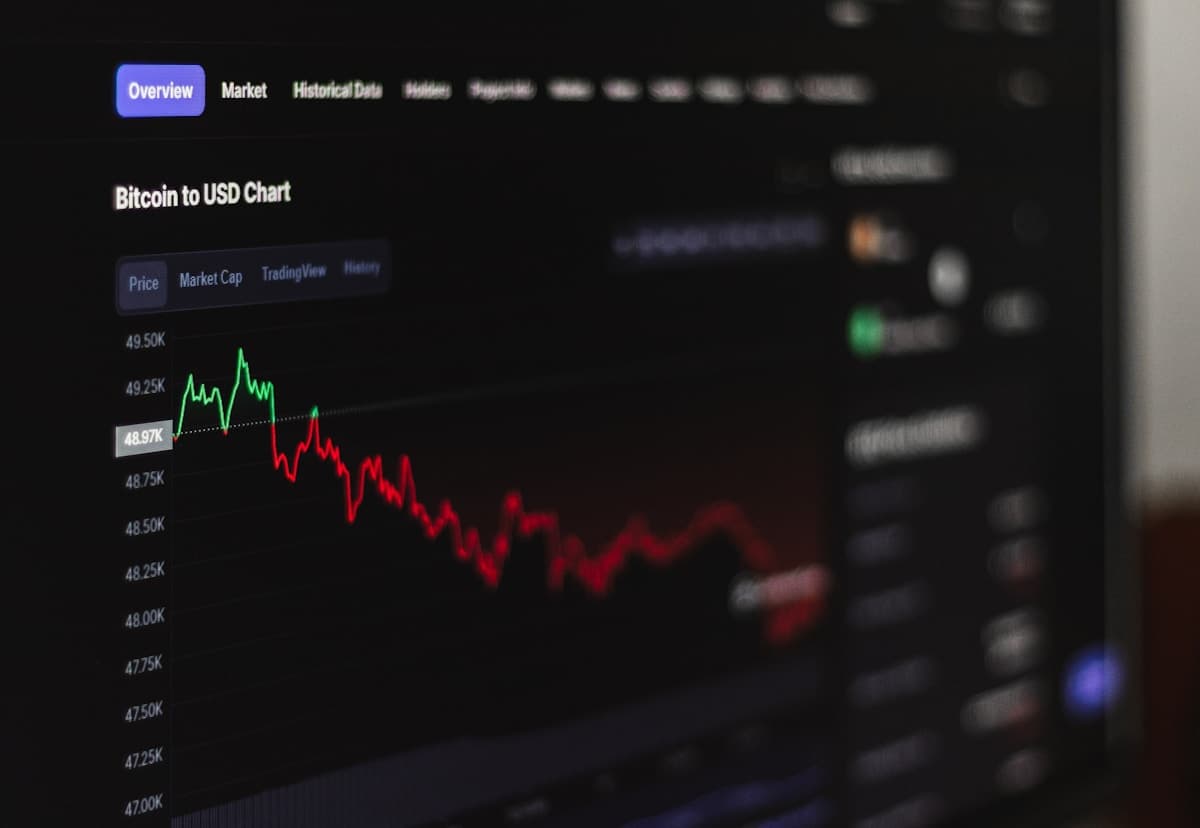
Monday was the kind of day that makes you check whether multiple bad things can really happen at once. (They can.) The Dow Jones Industrial Average dropped 822 points, or 1.7%, to close at 48,804. The S&P 500 shed 1% and slipped into the red for 2026. The Nasdaq Composite fell 1.1%. And the backdrop to all of this: Fed Governor Christopher Waller told an audience of economists that a March rate cut is a "coin flip," effectively killing the remaining hope for near-term monetary relief, while Trump's new 15% global tariff under Section 122 officially went into effect today.
The market was already on edge, and then IBM collapsed 13% after Anthropic announced its AI could automate COBOL modernization, the kind of work that generates billions in consulting revenue. That single stock accounted for a large chunk of the Dow's decline, but the sell-off spread to the entire software and consulting sector. This wasn't just a tariff day or a Fed day. It was an everything-goes-wrong day.
Waller's Coin Flip
Fed Governor Waller's comments at the National Association for Business Economics conference on February 23 were the most consequential Fed communication in weeks. He explicitly characterized a rate cut at the March 17-18 FOMC meeting as a "coin flip," a phrase that immediately repriced rate expectations across bond markets.
The reason for his hesitation is specific: January's jobs report showed the economy added 130,000 positions, nearly double the consensus estimate. That number threw a wrench into the narrative that the labor market was cooling enough to justify rate cuts. Waller said the Fed needs to determine whether the January data is "signal or noise," and the February employment report on March 6 will be the tiebreaker.
The CME Group's Fed Watch tool now shows a 96.1% probability that the FOMC holds rates steady in March. Markets are pricing in just two rate cuts for all of 2026, likely in June and possibly December. That's a far cry from the four to five cuts markets were expecting at the start of the year.
For consumers and businesses, "higher for longer" means mortgage rates stay elevated, business borrowing costs remain high, and the economic headwind from restrictive monetary policy continues. For markets, it means the Fed put that investors have relied on for decades is further away than they thought.
The 15% Tariff Goes Live
Today, February 24, Trump's 15% global tariff under Section 122 of the Trade Act of 1974 officially went into effect. This is the replacement for the IEEPA tariffs that the Supreme Court struck down on February 20. The new tariff applies to approximately $1.2 trillion worth of annual imports, covering about 34% of all goods entering the United States.
The Tax Foundation estimates that the Section 122 tariff, combined with existing Section 232 (steel, aluminum, autos) and Section 301 (China) tariffs, will increase the average U.S. household's tax burden by roughly $700 in 2026. That's lower than the $1,300 estimate under the old IEEPA tariffs, but it's still a meaningful hit to consumer spending power.
The tariff has a built-in 150-day expiration, putting the deadline around July 24, 2026. Unless Congress passes legislation to extend or replace it, the tariff disappears automatically. That creates a bizarre dynamic: the tariff is simultaneously too uncertain to plan around (businesses don't know if it will last) and too real to ignore (it's adding 15% to import costs right now).
Legal challenges are expected within days. Trade experts have already argued that the Section 122 tariff is legally vulnerable because the U.S. doesn't have the "large and serious balance-of-payments deficit" that the statute requires. The trade deficit exists because foreign investors want to put money into U.S. assets, which is a sign of strength, not crisis. This is the same type of statutory overreach argument that took down the IEEPA tariffs.
The AI Scare Trade
The day's most dramatic single-stock move was IBM's 13% crash after Anthropic announced that its Claude Code tool can automate COBOL modernization. IBM lost over $31 billion in market value, and the sell-off dragged down Accenture, Cognizant, and the broader software sector.
This is part of what analysts are calling the "AI scare trade": the pattern where AI companies demonstrate new capabilities and the stocks of companies they might displace immediately sell off. It's been happening intermittently since January, hitting cybersecurity companies, software firms, and now the consulting giants.
The AI scare trade creates a paradox for indices. AI companies are growing rapidly (positive for markets), but the companies they disrupt are often large-cap firms with significant index weight (negative for markets). The net effect is volatile, sector-specific rotations rather than a clear direction. On Monday, the negative side won.
Gold Rockets Past $5,100
While stocks and crypto were falling, gold was doing what it does in moments of fear: going up. Spot gold climbed 1.1% in early trading to reach $5,158 per ounce, and by the end of the day was trading near $5,190. Silver jumped over 3% to trade near $86.61 per ounce.
Gold has been on a remarkable run in 2026, hitting an all-time high of $5,595 on January 29 before pulling back. The February recovery has been driven by the same forces that are hammering everything else: tariff uncertainty, geopolitical tensions (particularly the U.S.-Iran standoff), and the growing fear of stagflation, a combination of slow economic growth and persistent inflation.
Gold's strength is the mirror image of the stock market's weakness. When investors lose confidence in growth assets, they rotate into stores of value. At $5,190 per ounce, gold is up roughly 70% from a year ago, reflecting a profound shift in how institutional investors are thinking about risk.
What the Bond Market Is Saying
The bond market tells a more complicated story than stocks or gold. Treasury yields rose after Waller's coin flip comments, as traders reduced their bets on rate cuts. The 10-year yield ticked up, reflecting both higher-for-longer rate expectations and concerns about government borrowing needs.
The SCOTUS tariff ruling created a unique fiscal situation. The government is losing IEEPA tariff revenue (approximately $2 billion per day) while potentially facing $133 billion in refund obligations, and the replacement Section 122 tariff generates less revenue (lower rates, narrower coverage). That fiscal gap has to be funded, which means more Treasury issuance, which puts upward pressure on yields.
The bond market is caught between deflationary forces (tariff removal should lower prices) and inflationary ones (the new 15% tariff adds costs, and Waller's higher-for-longer stance suggests the Fed sees inflation as sticky). The result is a market that doesn't know which direction to move, which usually means volatility.
What to Watch This Week
The key dates this week: March 6 is the February jobs report, which Waller explicitly identified as his tiebreaker for the March rate decision. A weak number reopens the door for a cut; a strong one effectively closes it.
The Section 122 tariff's legal challenge timeline is also worth watching. If importers file for emergency injunctions and a court grants one, the tariff could be paused before its economic effects fully materialize. If the legal challenge takes months, businesses are stuck planning around a 15% cost increase that may or may not be temporary.
And the broader question: is this the new normal? A world where tariff uncertainty, Fed uncertainty, and AI disruption hit simultaneously isn't a one-time event. It's the economic environment of 2026. The investors and businesses that accept that reality and build resilience will do better than those waiting for things to calm down. Things aren't calming down.
References
- Fed's Waller calls March interest-rate cut 'a coin flip' - The Street
- Dow drops 800 points as AI disruption fears and tariff woes weigh on markets - CNBC
- Gold and Silver Surge as Stagflation Fears and Geopolitical Tensions Rebuild the 'Risk Premium' - MarketMinute
- Stocks drop after Trump ramps up new tariffs and investors dump potential AI losers - PBS
- Five key takeaways from the Supreme Court's landmark decision against Trump's tariffs - CNBC
Get the Daily Briefing
AI, Crypto, Economy, and Politics. Four stories. Every morning.
No spam. Unsubscribe anytime.