Ripple Just Valued Itself at $50 Billion, and XRP Barely Flinched
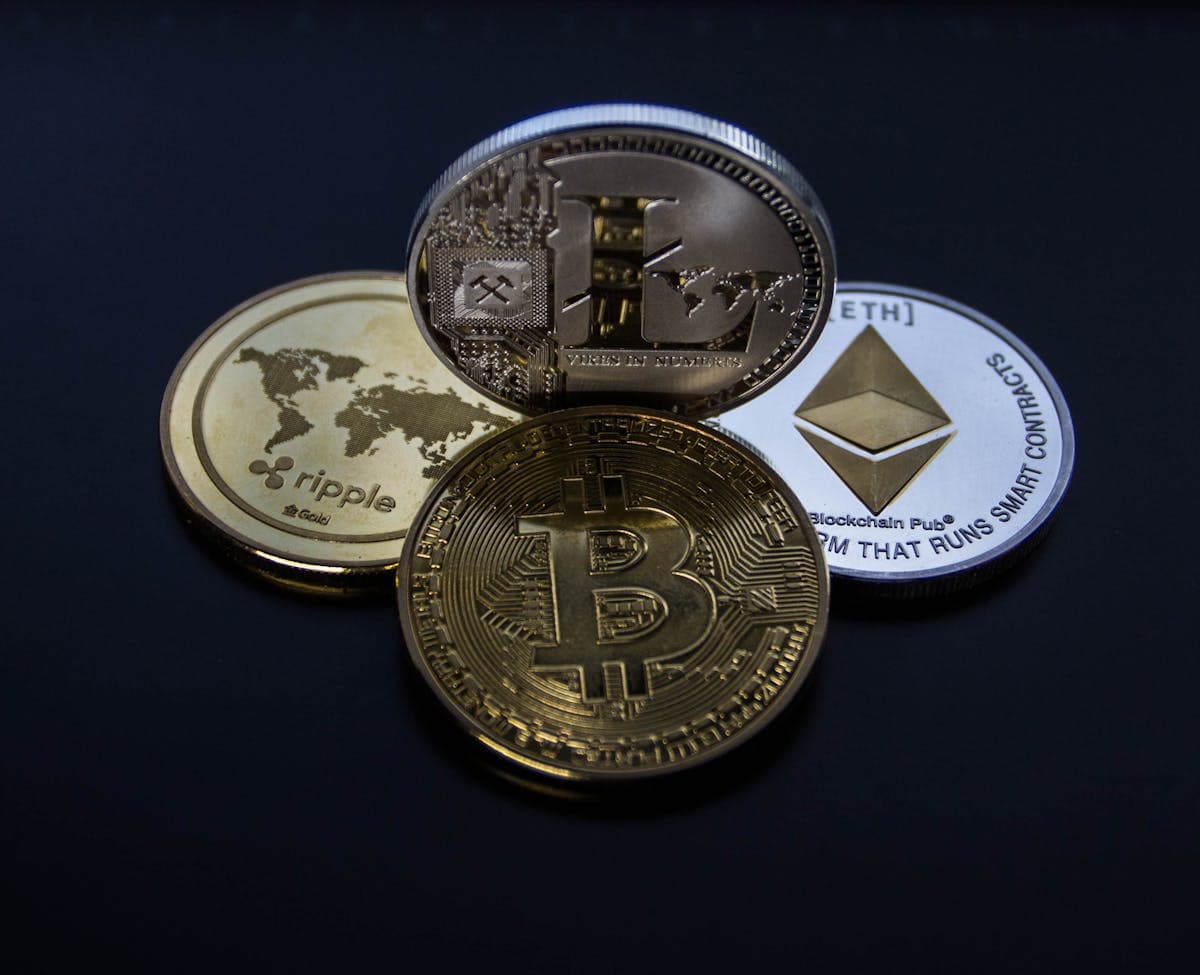
Ripple just launched a $750 million share buyback that values the company at $50 billion. Goldman Sachs disclosed a $154 million position in XRP ETFs, making it the largest institutional holder. The SEC and CFTC signed a historic memorandum of understanding on joint crypto oversight. And after all of that? XRP moved up 0.3% in 24 hours, trading around $1.38. Sometimes the most interesting story is the one the market refuses to tell.
The Buyback: What $750 Million Actually Means
Ripple's share buyback is a tender offer of up to $750 million, open to employees and existing investors through April 2026. The implied valuation of $50 billion represents a 25% jump from the $40 billion figure the company carried during its November 2025 fundraise, when it pulled in $500 million from a murderer's row of institutional investors: Fortress, Citadel Securities, Pantera Capital, Galaxy Digital, Brevan Howard, and Marshall Wace.
At $50 billion, Ripple now ranks among the top ten most valuable private companies in the world. That puts it in the same conversation as SpaceX, Stripe, and Databricks. For a crypto company that spent years locked in an existential legal battle with the SEC, that is a remarkable turnaround.
The mechanics here matter. A share buyback lets existing shareholders sell their equity back to the company at a set price. For early employees sitting on paper gains, this is a liquidity event without needing an IPO. For Ripple, it signals confidence that the company believes its shares are worth buying at the current price, and it reduces the number of shares outstanding.
Why No IPO? The Strategy Behind Staying Private
Despite the eye-popping valuation, both CEO Brad Garlinghouse and president Monica Long have repeatedly said that Ripple has no plans for an IPO. This might seem counterintuitive. A $50 billion private company would likely command serious interest on public markets, especially given the current appetite for crypto-adjacent equities.
But staying private gives Ripple something an IPO would take away: control. Public companies deal with quarterly earnings pressure, activist investors, and SEC reporting requirements that can constrain strategic decision-making. For a company sitting on billions of dollars worth of XRP and navigating complex regulatory relationships across dozens of countries, that kind of flexibility is worth a lot.
The buyback essentially functions as a private market IPO alternative. Employees and investors get liquidity. The company gets to set its own valuation narrative. And Ripple avoids the circus of a public listing in a market that has not always been kind to crypto companies.
Goldman Sachs: The $154 Million XRP Bet
Perhaps the most telling development in the Ripple ecosystem this week is not the buyback itself but who is buying XRP exposure on the open market. Goldman Sachs disclosed that it holds $154 million in spot XRP ETFs, making it the single largest institutional holder of XRP ETF products.
Let that register for a moment. Goldman Sachs, the institution that once dismissed crypto as too speculative for serious capital allocation, is now the biggest whale in XRP ETFs. This is not a toe-in-the-water position. At $154 million, it represents a meaningful allocation that required multiple layers of internal approval at one of the most risk-conscious firms on Wall Street.
Spot XRP ETFs have attracted $1.26 billion in cumulative inflows since their launch. Goldman's position represents roughly 12% of the total. That level of concentration from a single traditional finance player suggests conviction, not experimentation.
Why XRP Didn't Move: The Equity vs. Token Disconnect
Here is the part that confuses a lot of people. Ripple the company just got valued at $50 billion. Goldman Sachs is loading up on XRP ETFs. So why did XRP only move 0.3%?
The answer comes down to a fundamental distinction that the crypto market has slowly learned to price in: Ripple's equity and XRP are not the same thing. A share buyback is a corporate equity transaction. It does not affect XRP's circulating supply, burn rate, or utility. When Ripple buys back shares, it is buying pieces of the company, not tokens off the open market.
Think of it this way. If Apple announces a stock buyback, you would not expect the price of iPhones to change. Similarly, Ripple's corporate valuation can climb without directly moving XRP's price. The market has gotten sophisticated enough to understand this distinction, which is actually a sign of maturity.
That said, a $50 billion Ripple is arguably bullish for XRP over the longer term. A well-capitalized, increasingly legitimate company with deep institutional relationships is better positioned to drive adoption of the XRP Ledger. The benefits just flow through indirectly and on a longer timeline than traders would like.
The Institutional Tide: More Than Just Goldman
Goldman Sachs gets the headline, but the broader institutional picture for XRP is worth examining. The $1.26 billion in cumulative ETF inflows represents a market that has moved well beyond retail speculation. These are regulated financial products held in brokerage accounts, retirement portfolios, and institutional mandates.
The November 2025 fundraise participants tell a similar story. Fortress is a major alternative asset manager. Citadel Securities is one of the most important market makers in global finance. Brevan Howard and Marshall Wace are heavyweight hedge funds. These firms do not invest in memes; they invest in infrastructure plays they believe will generate returns over years.
What is emerging is a two-track market for Ripple and XRP. The equity side is attracting traditional finance capital through private rounds and buybacks. The token side is attracting both institutional and retail capital through ETFs and direct purchases. Both tracks are growing, but they operate on different timelines and respond to different catalysts.
The Regulatory Backdrop: SEC and CFTC Join Forces
The timing of Ripple's buyback coincides with another significant development. The SEC and CFTC signed a historic memorandum of understanding on joint crypto oversight. After years of jurisdictional turf wars over which agency regulates what in crypto, the two biggest financial regulators in the United States are now formally coordinating.
For Ripple specifically, this matters a great deal. The company's multi-year legal battle with the SEC centered on whether XRP was a security. Clearer regulatory frameworks and better inter-agency coordination reduce the kind of enforcement-by-ambiguity that nearly destroyed Ripple's business. A more predictable regulatory environment is exactly what a $50 billion company needs to plan its next moves.
For the broader crypto industry, the MOU signals that Washington is moving toward a more structured approach to digital asset regulation. This is the kind of institutional infrastructure that brings in the next wave of capital, not from retail traders chasing momentum, but from pension funds, endowments, and sovereign wealth funds that need regulatory clarity before they can allocate.
What to Watch Next
The tender offer runs through April 2026, so we will see how much of that $750 million actually gets taken up by employees and investors. High participation would suggest insiders believe the $50 billion valuation is fair or even conservative. Low participation would indicate that holders think the company is worth more and prefer to keep their shares.
Keep an eye on XRP ETF flows in the coming weeks. Goldman's $154 million position could spark a herding effect among other institutional allocators who benchmark against each other. If two or three more big names disclose meaningful positions, that $1.26 billion in cumulative inflows could accelerate quickly.
And watch the IPO conversation. Ripple says no plans right now, but at $50 billion with growing institutional legitimacy, the gravitational pull toward public markets only gets stronger. The buyback buys them time, but the question is not really if Ripple goes public. It is when, and on whose terms.
References
- Ripple launches $750 million share buyback at $50 billion valuation - The Block
- Ripple Launches $750 Million Share Buyback at $50 Billion Valuation - Bloomberg
- Ripple's share buyback program values the firm at $50 billion - CoinDesk
- Ripple Launches $750M Share Buyback as Goldman Sachs Loads Up on XRP ETFs - Benzinga
Get the Daily Briefing
AI, Crypto, Economy, and Politics. Four stories. Every morning.
No spam. Unsubscribe anytime.