$1.2 Billion in One Week: The Robotics Funding Frenzy Is Here
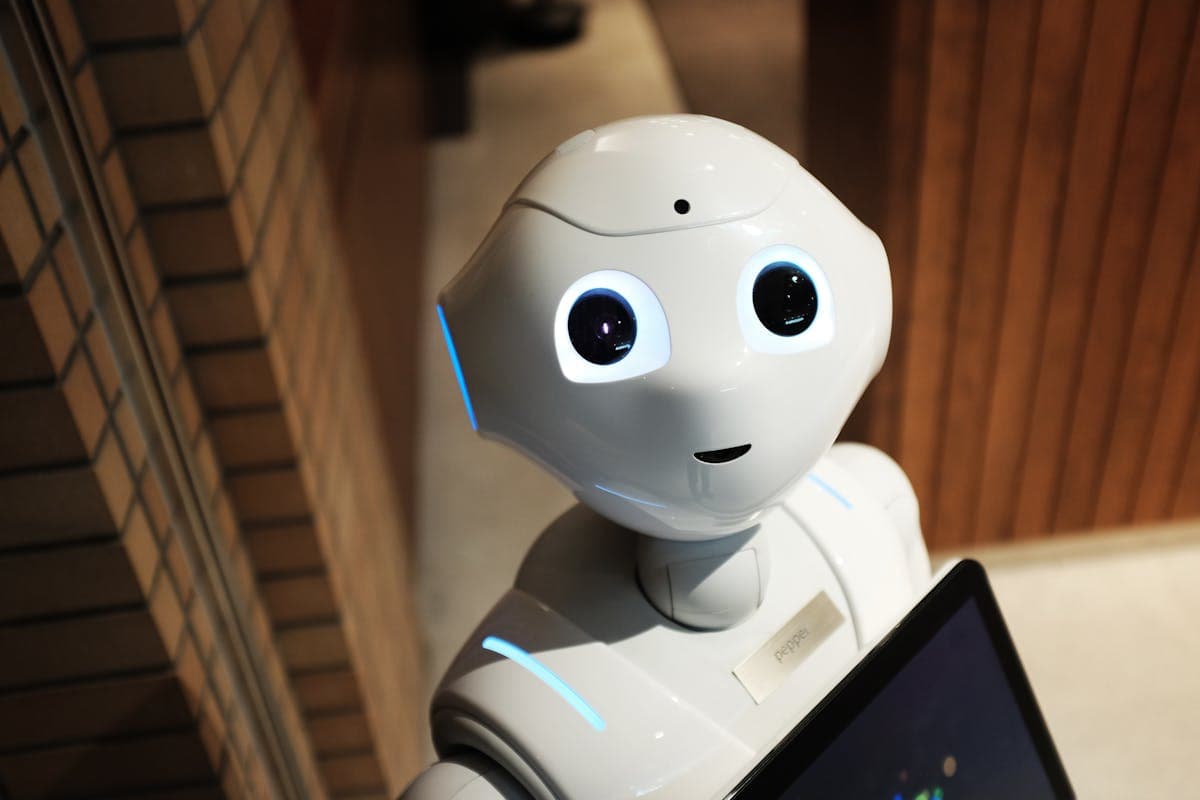
Something wild happened in the second week of March. Four robotics companies, targeting completely different markets, collectively raised $1.2 billion in venture funding. A Rivian spinout building factory robots. A stealth startup training machines from YouTube videos. A humanoid that does your dishes. And a British autonomous vehicle company backed by Nvidia and BP. This isn't normal. And it's telling us something important about where AI capital is flowing next.
Mind Robotics: From Electric Cars to Factory Floors
The biggest check of the week went to Mind Robotics, which pulled in a $500 million Series A co-led by Accel and Andreessen Horowitz, valuing the company at roughly $2 billion. What makes Mind unusual is its origin: it was spun out of Rivian, the electric vehicle maker, in November 2025 by Rivian CEO RJ Scaringe himself, who serves as chairman.
The thesis is straightforward but clever. Rivian's factories generate enormous amounts of data about how physical objects move, break, bend, and fit together. Mind Robotics wants to use that data to train industrial robots that are more dexterous and adaptable than today's rigid, pre-programmed machines. Think robots that can handle manufacturing tasks they weren't explicitly programmed for, adjusting on the fly when something unexpected happens on the assembly line.
What's remarkable is the fundraising velocity. Mind closed a $115 million seed round from Eclipse in late 2025, meaning the company has raised $615 million total in just a few months of existence. Scaringe has also hinted that Rivian's custom silicon chips, originally designed for autonomous driving, could be sold to Mind Robotics as general-purpose robotics processors.
Rhoda AI: Teaching Robots by Watching the Internet
On March 10, the same week, Rhoda AI emerged from stealth with a $450 million Series A led by Premji Invest, valuing the Palo Alto startup at $1.7 billion. The investor lineup reads like a who's who: Khosla Ventures, Singapore's Temasek, and legendary venture capitalist John Doerr.
Rhoda's approach is what sets it apart. Instead of training robots in expensive simulated environments or painstakingly programming specific movements, Rhoda pre-trains its models on hundreds of millions of internet videos to build an intuitive understanding of motion, physics, and physical interaction. The company calls its architecture Direct Video Action (DVA), a system that bridges perception and control in real time, updating robot behavior dynamically as conditions change.
The practical results are already impressive. In a recent high-volume manufacturing evaluation, Rhoda's technology completed a component-processing workflow in under two minutes per cycle without human intervention. The company is focused on manufacturing and logistics, the two sectors where the gap between what robots can theoretically do and what they actually handle in messy, changing real-world environments remains widest.
Sunday: The $1.15 Billion Dish-Doing Humanoid
If Mind and Rhoda represent the industrial side of the robotics wave, Sunday represents the consumer dream. The startup raised $165 million in Series B funding led by Coatue Management, with Bain Capital Ventures, Tiger Global, Benchmark, and Conviction Partners joining. That round values Sunday at $1.15 billion, making it a freshly minted unicorn.
Sunday is building a household humanoid robot called Memo that can clear a dinner table, load a dishwasher, do laundry, and handle other domestic chores. It's the kind of product that has been promised and ridiculed in roughly equal measure for decades, but the convergence of better AI models, cheaper sensors, and improved dexterity hardware is making the concept more plausible than ever.
The timing is interesting. Just as factory robots are getting smarter (Mind, Rhoda), the same underlying technologies, large-scale model training, video-based learning, adaptive control, are being applied to the home. Sunday's bet is that the same techniques that let a robot handle unexpected objects on an assembly line can let a robot handle the chaos of a family kitchen.
Oxa: Self-Driving, But Not for Cars
Rounding out the billion-dollar week is Oxa, a UK-based startup that raised $103 million in Series D funding. The round was anchored by a $50 million commitment from the UK's National Wealth Fund, with additional backing from Nvidia's NVentures, BP Ventures, IP Group, and Hostplus.
Oxa is notably not trying to build self-driving cars for highways. Instead, it's developing autonomous software for industrial vehicles: think ports, airports, warehouses, and manufacturing sites. Its customers include DHL, Vantec, and BP. The logic is that controlled industrial environments are far easier to automate than open city streets, and the economic case is immediately compelling since these are repetitive, high-value transport tasks where labor costs are rising and availability is shrinking.
The UK government's involvement through the National Wealth Fund is significant. It's a signal that autonomous industrial vehicles are being treated as critical infrastructure, not just a tech experiment.
Why All at Once?
A billion dollars in robotics funding in a single week isn't a coincidence. Three forces are converging.
First, the foundation model revolution has jumped from language to physical intelligence. The same techniques that made LLMs powerful, training on massive datasets, transfer learning, scaling laws, are now being applied to robotics. Rhoda's video-trained models and Mind's factory-data approach are both descendants of the transformer architecture that powers ChatGPT.
Second, the cost of hardware is dropping. Better sensors, cheaper actuators, and more powerful edge computing chips (hello, Nvidia) mean the physical platform for a robot is less expensive than it was even two years ago. That shifts the competitive advantage to software and data, which is where venture capital loves to play.
Third, there's a labor story. Manufacturing, logistics, and domestic services face chronic worker shortages across developed economies. With aging populations in the US, Europe, Japan, and Korea, the demographic math doesn't improve. Robots that can handle unstructured, changing environments aren't a luxury; they're becoming an economic necessity.
What to Watch
Combined with February's Figure AI momentum and SkildAI's $1.4 billion round earlier this year, 2026 is on pace for over $20 billion in robotics funding. That would make it the biggest year for robotics investment in history, and it's only March.
The key question isn't whether the money will keep flowing. It will. The question is which approach wins: purpose-built robots for specific industries (Mind, Oxa) or general-purpose models that can be applied anywhere (Rhoda, Sunday)? The answer might be both, but the market will only support so many billion-dollar robotics companies before demanding real revenue. The clock starts now.
References
- Rivian spin-out Mind Robotics raises $500M for industrial AI-powered robots - TechCrunch
- Rhoda AI raises $450M to build foundational robotics models - SiliconANGLE
- Humanoid robotics maker Sunday reaches $1.15B valuation - TechCrunch
- UK self-driving startup Oxa raises $103M to scale industrial deployments - Tech.eu
- The Week's 10 Biggest Funding Rounds - Crunchbase News
Get the Daily Briefing
AI, Crypto, Economy, and Politics. Four stories. Every morning.
No spam. Unsubscribe anytime.